Seattle Commons

Preview access. Enter the password to continue.

Incorrect password. Please try again.
Pine
YOU ARE HERE
Pike
YOU ARE HERE
Walking Tour

Pike & Pine Streets

Pike Place Market → Boren → back via Pine · 33 stops · ~2 miles


Pike Street — Boren to Pike Place Market (17 stops)
1

Boren & Pike

Pike
Stop 1 photo Stop 1 photo Stop 1 photo Stop 1 photo Stop 1 photo
Now

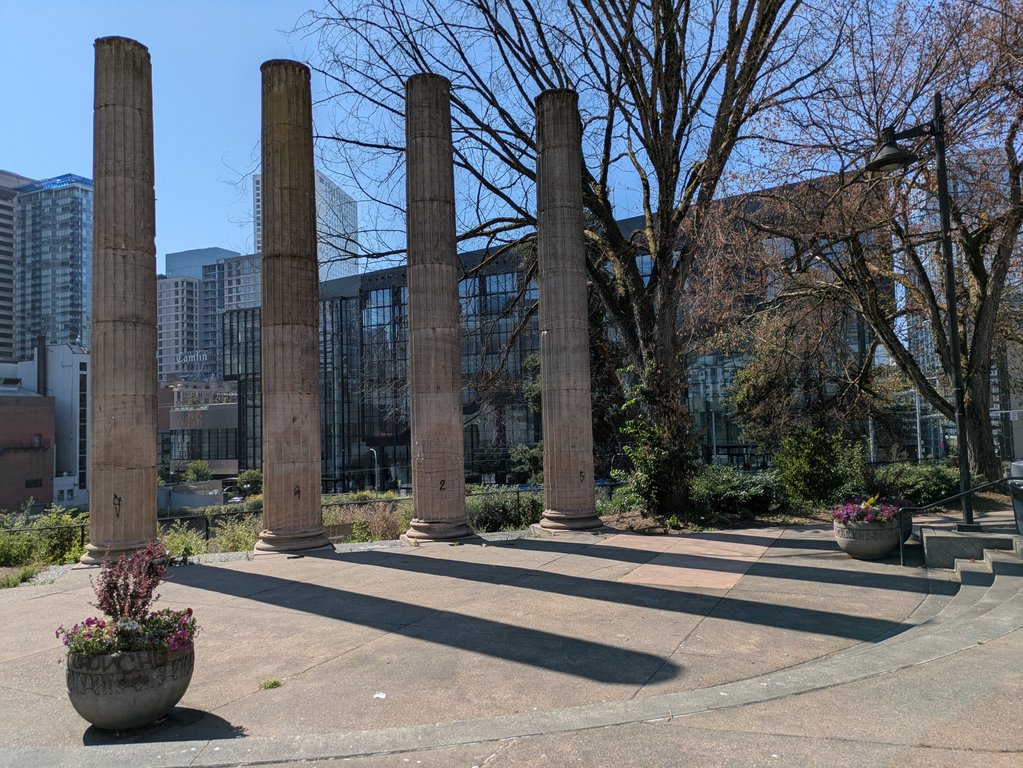
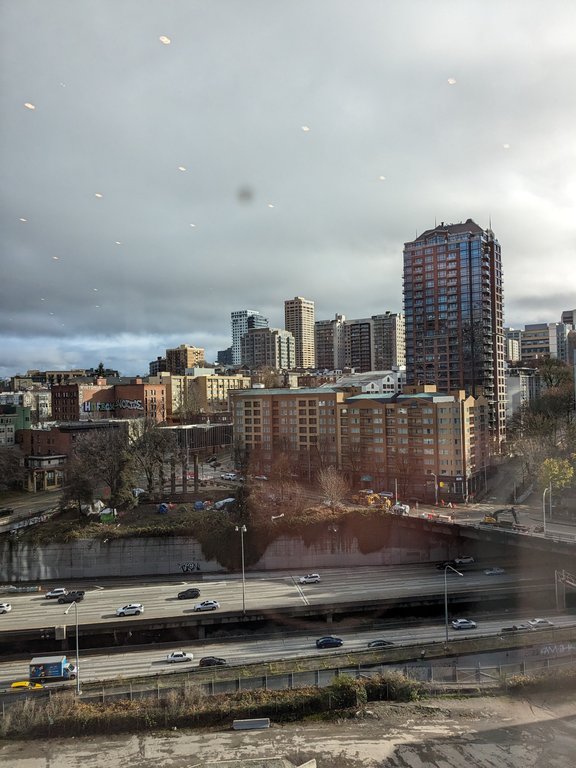
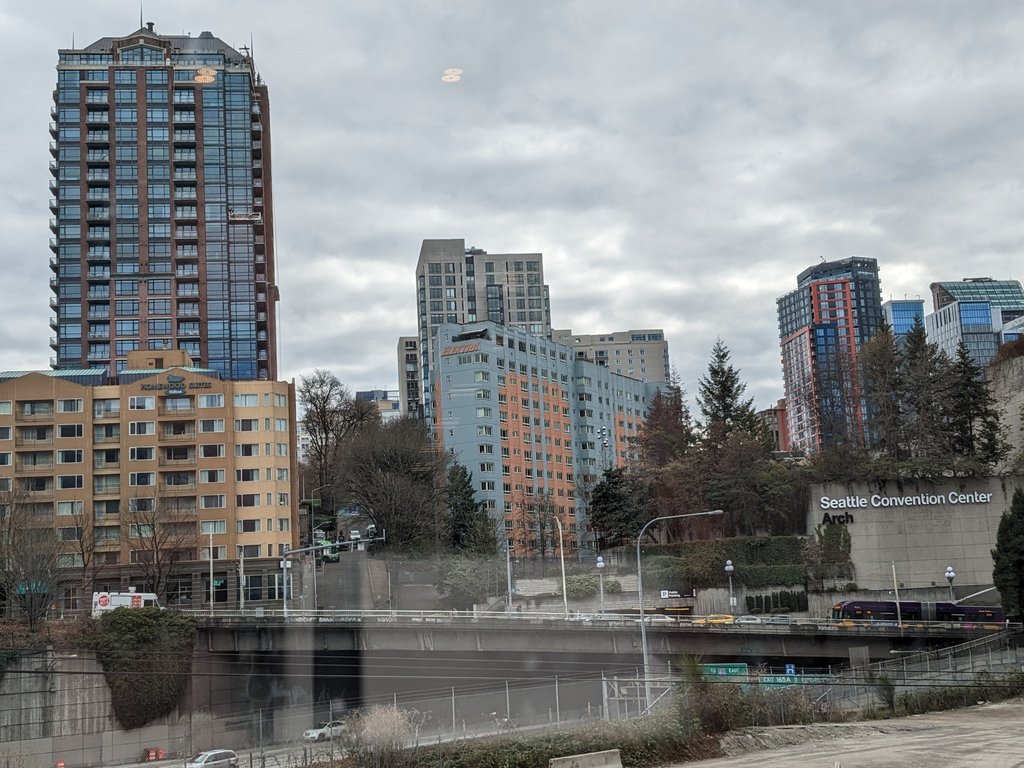
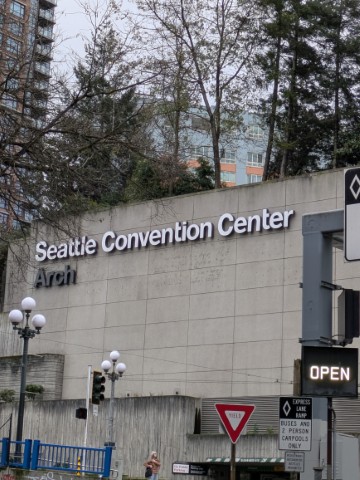
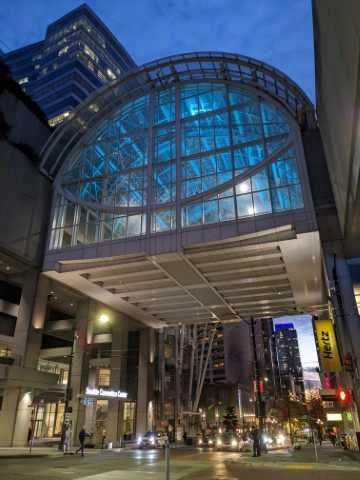
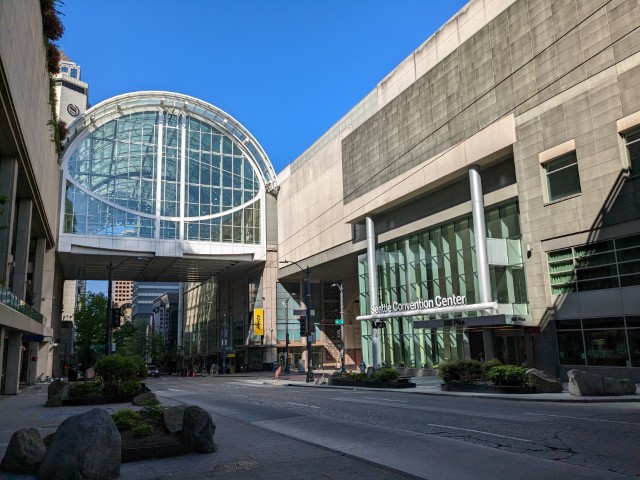
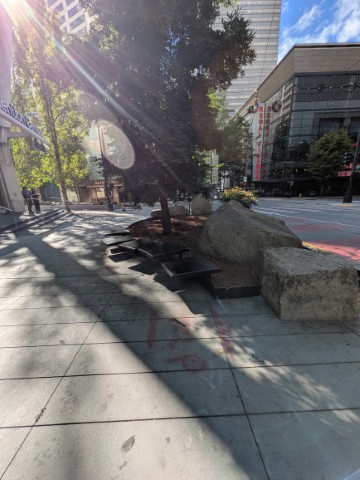
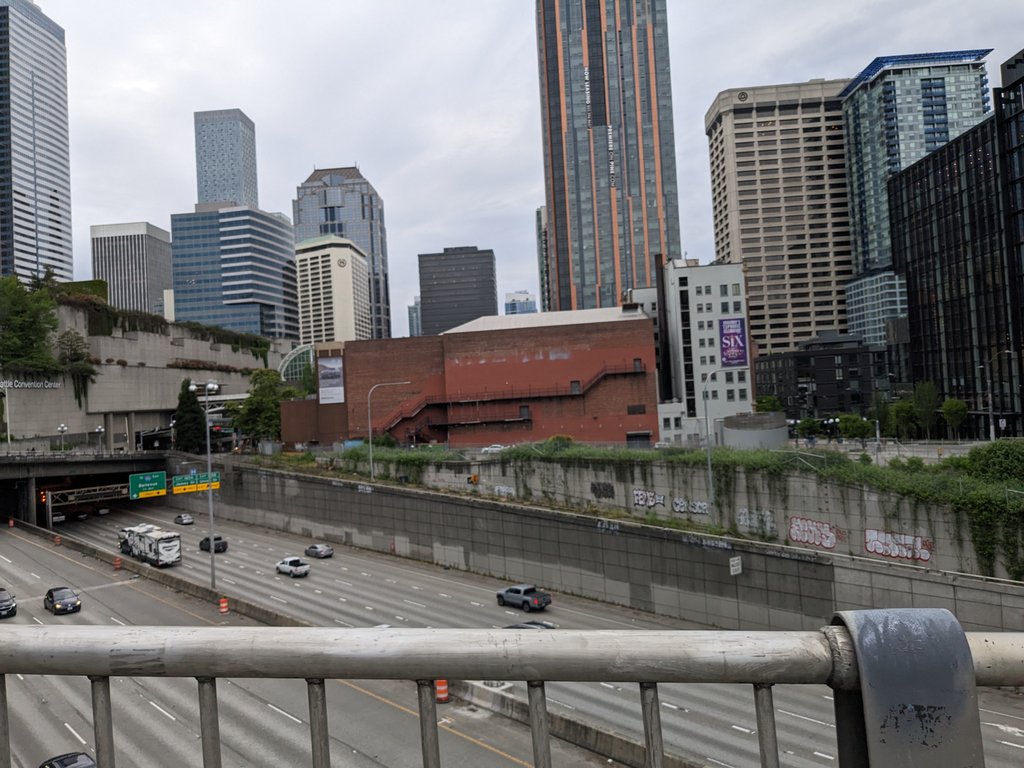
We begin our tour at Plymouth Pillars Park. See the Summit and the Arch. Hear the sounds of I-5 below. Boren Ave. carries traffic to and from the I-5 ramps. Glance up E Pine toward Capitol Hill to see Victrola Coffee Roasters about a block past the boarded-up Starbucks Roastery.

The Summit Hillclimb offers panoramic views of First Hill and Capitol Hill, with parts of downtown visible in the distance. The neighborhood sees the Summit's clean architectural lines and smooth facade. The Summit sees jagged edges, exposed highway infrastructure, and the parking structure of the building it made superfluous.

Status Quo

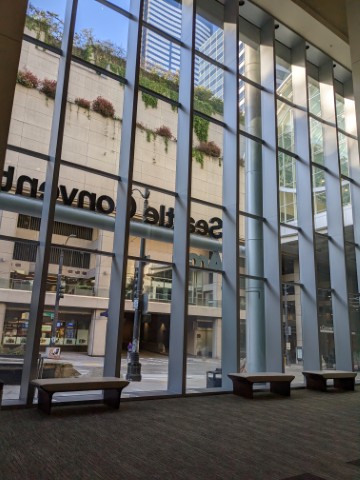
The Summit's architects made a deliberate choice: floor-to-ceiling glass facing the neighborhood. Not the upscale hotels. Not Elliott Bay. The nearby residential buildings, the Arch parking structure, and an open view down into I-5. The neighborhood is part of the Summit experience.

That view is also a challenge. The largest visible parcel from the Summit Hillclimb is the highway trench and the land around it—exactly the area the Lid I-5 initiative proposes to cap and redevelop. The potential is enormous: the Summit looking out not over a vacant lot and open freeway, but over new civic space connecting downtown to First Hill and Capitol Hill.

Under the status quo, that's a long way off. The lid needs political will, billions in funding, and a reason to connect these neighborhoods.

Seattle Commons

In 1991, Seattle Times columnist John Hinterberger proposed a 61-acre park stretching from downtown to Lake Union.1 Paul Allen put up $30 million to buy land.2 They called it the Seattle Commons. Voters rejected it twice—in 1995 and 1996.3 Allen kept the land, Vulcan built on it, and Amazon moved in. South Lake Union got tech campuses instead of a park.

Now imagine you're in the Summit, looking out over a new Seattle Commons—not in South Lake Union, but right here, in the geographic center of Seattle.

And the best part is that we don't have to wait for a highway lid to make it a reality. We already have the infrastructure. It's right there in front of us.

On this tour, we're going to head down to Pike Place Market on Pike Street and return to the Summit on Pine Street. Along the way, I'm going to introduce a new idea—or more accurately, reintroduce an old one—for Seattle Commons as a reinvention of the Arch.

2

Pike, Boren to 9th

Pike
Stop 2 photo Stop 2 photo
Now

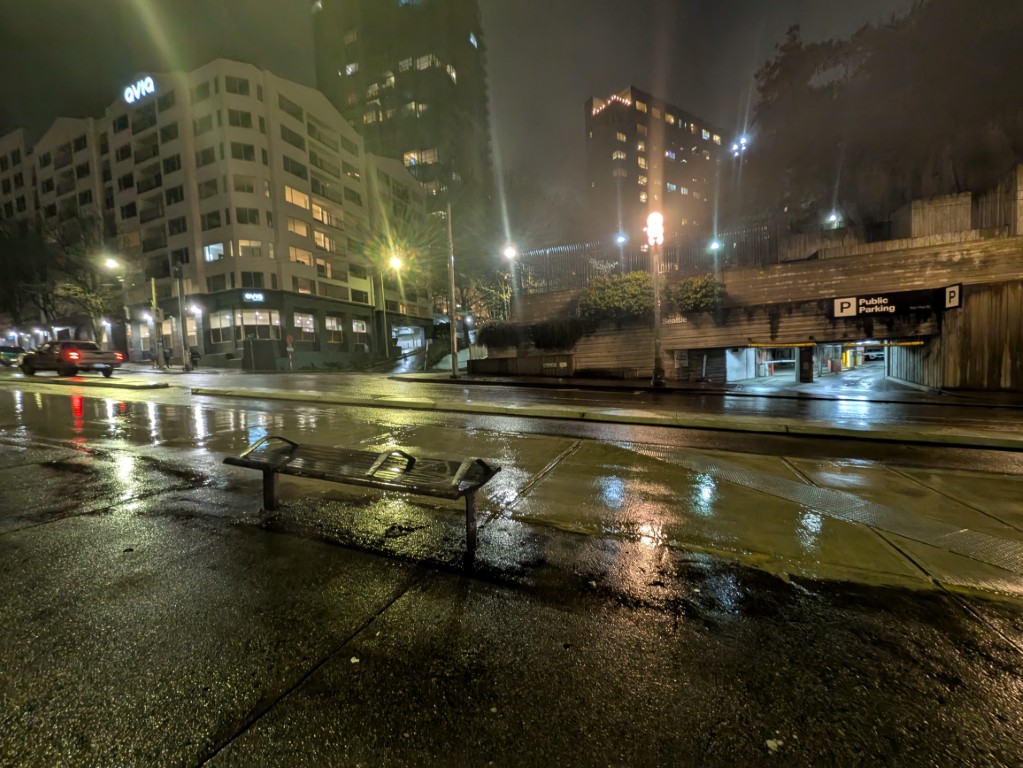
On the south side of Pike, a building that used to be a Homewood Suites is now AVIA Apartments. A Utah investment firm paid $60 million for the extended-stay hotel in 2022 and bet that residential renters would be a better market than convention visitors.4 They planned to open in October 2024. It opened in December 2025, offering six weeks free rent.5

That conversion tells you something. The hotel market next to a convention center should be bulletproof—visitors need rooms. But PEG Companies looked at the numbers and decided apartments were the safer play. The market is saying what the convention center won't: there aren't enough visitors to sustain the hotels we already have.

Here's why that matters for funding. The convention center was built with hotel taxes—a 7% surcharge on every room night in Seattle, 2.8% in the rest of King County.6 Seattle's hotels pay the lion's share. The theory is straightforward: the convention center attracts visitors, visitors fill hotels, hotels generate the tax revenue that pays the convention center's debt. But when a hotel next door converts to apartments, it stops paying that 7% tax forever. Every conversion shrinks the revenue base that the $1.9 billion Summit debt depends on.7

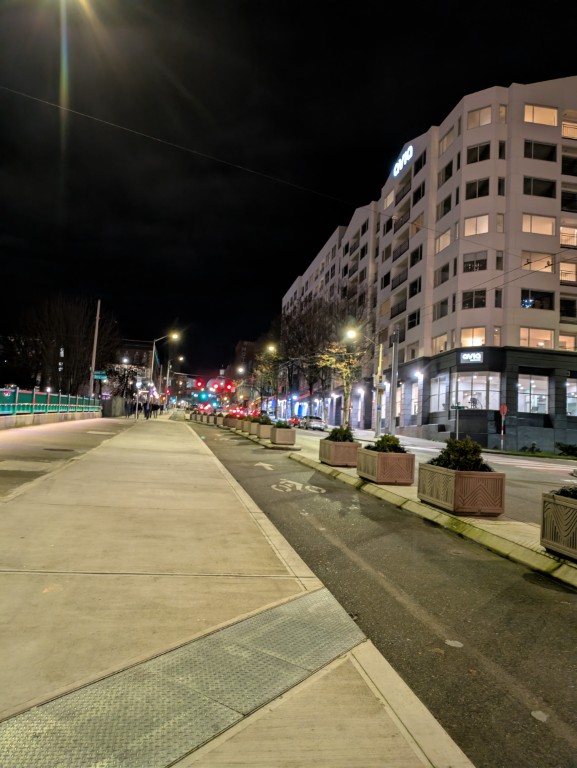
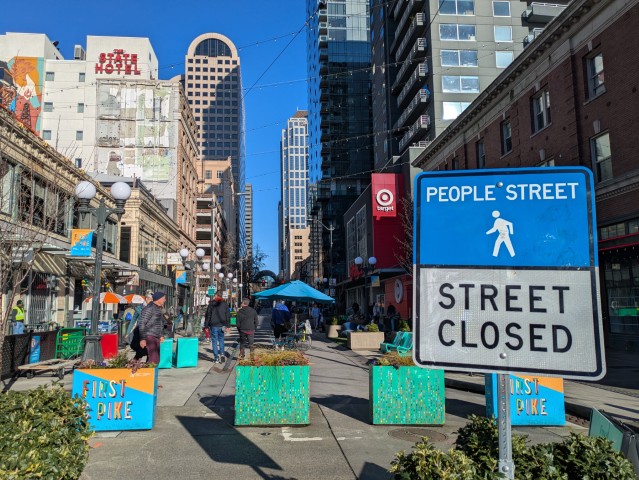
On the north side: the Pike-Pine Improvements. Widened sidewalks, new planters, protected bike lanes. Beautiful infrastructure, finished in 2025, designed for a corridor with foot traffic. Look around. Count the pedestrians.

Status Quo

The convention center's debt is $1.9 billion. The interest alone is $75 million a year.8 That debt is backed by hotel taxes—the 7% surcharge you just heard about. The theory was simple: build Summit, attract more conventions, fill more hotel rooms, generate more tax revenue to service the debt. But the theory has a problem: the convention center's own financial reserves have dropped from over $200 million to $25 million.9 Operating costs are two and a half times what they were before the pandemic.10 The CEO has used the words "fragile" and "scary" to describe the situation.11

And that's before you count the hotel that just converted to apartments next door.

Every hotel that leaves the system—whether it converts, closes, or loses occupancy—shrinks the tax base that services the debt. The model needs more visitors to fill more rooms to generate more revenue. But the neighborhood around the convention center is getting worse, not better. Convention planners notice. The word-of-mouth spreads. Future bookings get harder. The revenue the debt depends on gets harder to generate. And the cycle tightens.

This is the status quo without any external shocks. No recession, no pandemic, no new competitor. Just the math of a $1.9 billion bet on a visitor economy that isn't generating enough revenue to sustain itself.

Seattle Commons

What happens on the 300 days a year when there's no convention?

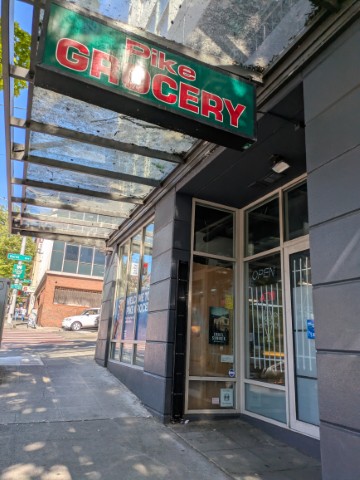
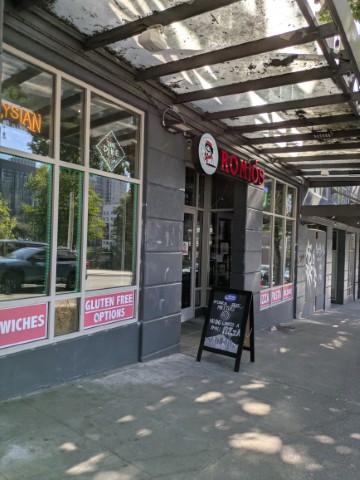
The visitor model gives you crowds for a few days, then nothing. The neighborhood businesses you just passed—Romio's, Pike Grocery, Zaika—are subsisting on a handful of event days per year. They need daily customers. They need people who live here, or near here, or who have a reason to come here that doesn't depend on a convention schedule..

The original Seattle Commons idea was for a park in South Lake Union. That canoe has sailed, but how about a 435,000-square-foot usually-empty building?

3

Pike & Terry / Hubbell Place

Pike
Stop 3 photo Stop 3 photo
Now

The Pike-Pine Improvements consist of widened sidewalks, protected bike lanes, 1,400 new plants, integrated public art, and new seating across 23 blocks from Pike Place Market to Capitol Hill. The city completed this project in June 2025 as part of the Waterfront Seattle program. More than 1.5 million people move through this corridor every month.12

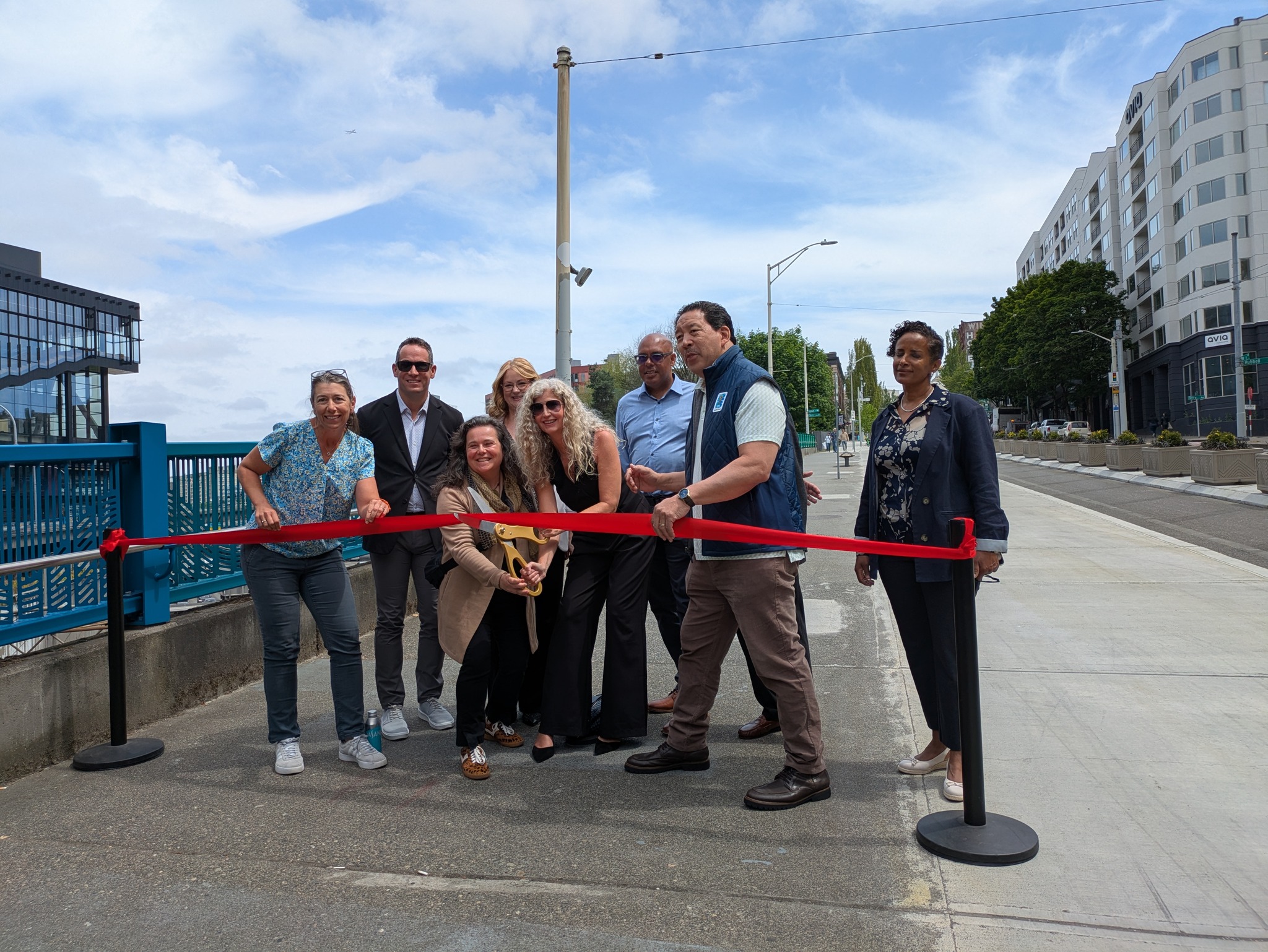
At the ribbon cutting, Seattle Convention Center CEO Jennifer LeMaster called the project "a testament to the level of thoughtful design and civic integration required to weave together safety, connectedness, and sense of place." She's right. It's excellent infrastructure. Now look at this block and count the pedestrians.

Status Quo

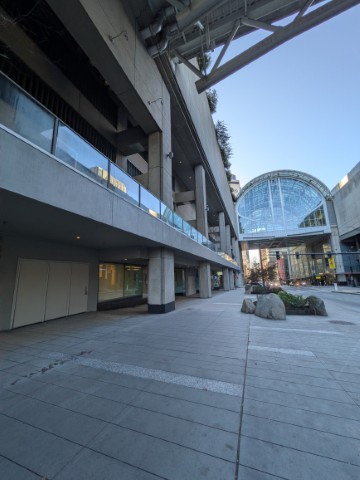
When the Summit opened at 900 Pine in 2023, the market followed. Two buildings give the center operational flexibility—you can set up one while the other hosts an event. But that scheduling advantage only works if demand is strong enough to keep both in rotation. It isn't. Based on the SCC's own public event calendar, the Arch sits empty roughly 300 days a year. And most of the events it does host aren't large enough for anyone on Pike Street to notice. This block rarely feels like a convention—foot traffic, badge lanyards, attendees on the sidewalk—and even less like a center.

The SCC is carrying $1.9 billion in debt on the Summit while burning cash to keep the Arch open. One building has the debt. The other has the empty calendar. And the new sidewalks and bike lanes connect Pike Place Market to Capitol Hill, right past a massive facility that's dark most days.
Seattle Commons

Look across the street at the Summit. That building is perfect for what it does—hosting out-of-town visitors for multi-day conventions.

Now look at the Arch. That building is perfect for locals.

4

Pike, Terry to 9th

Pike
Stop 4 photo Stop 4 photo Stop 4 photo Stop 4 photo
Now

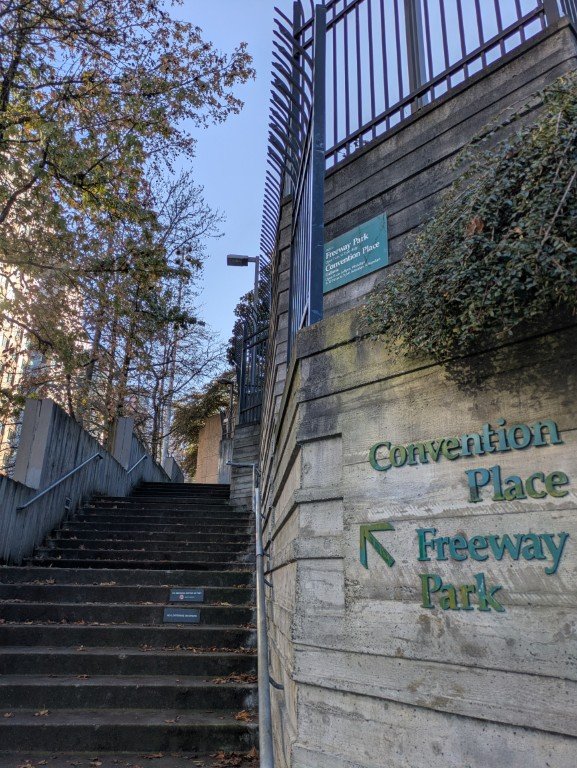
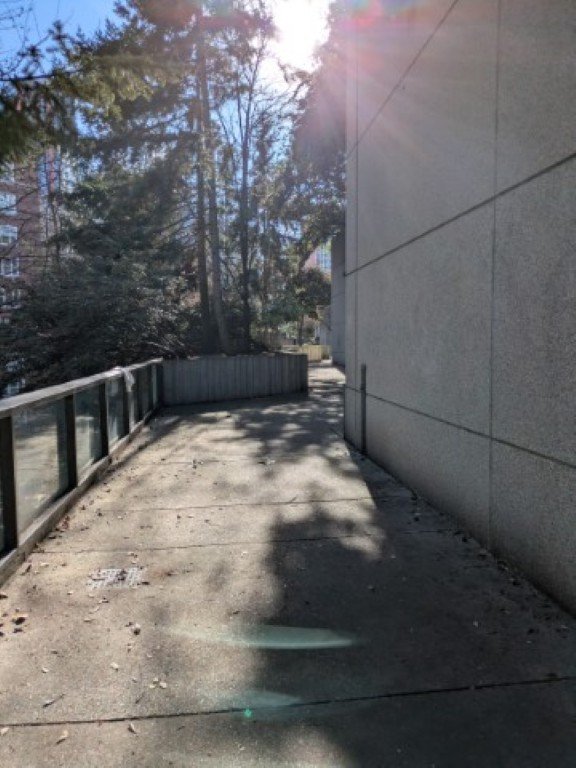
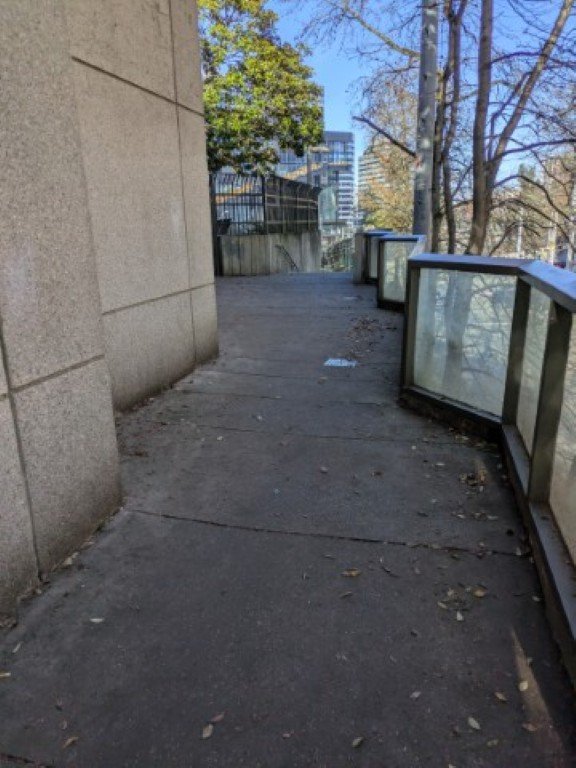
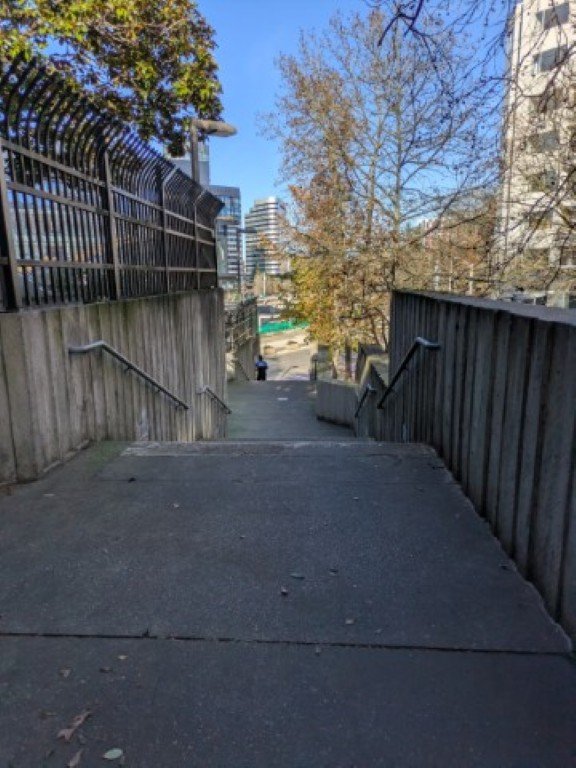
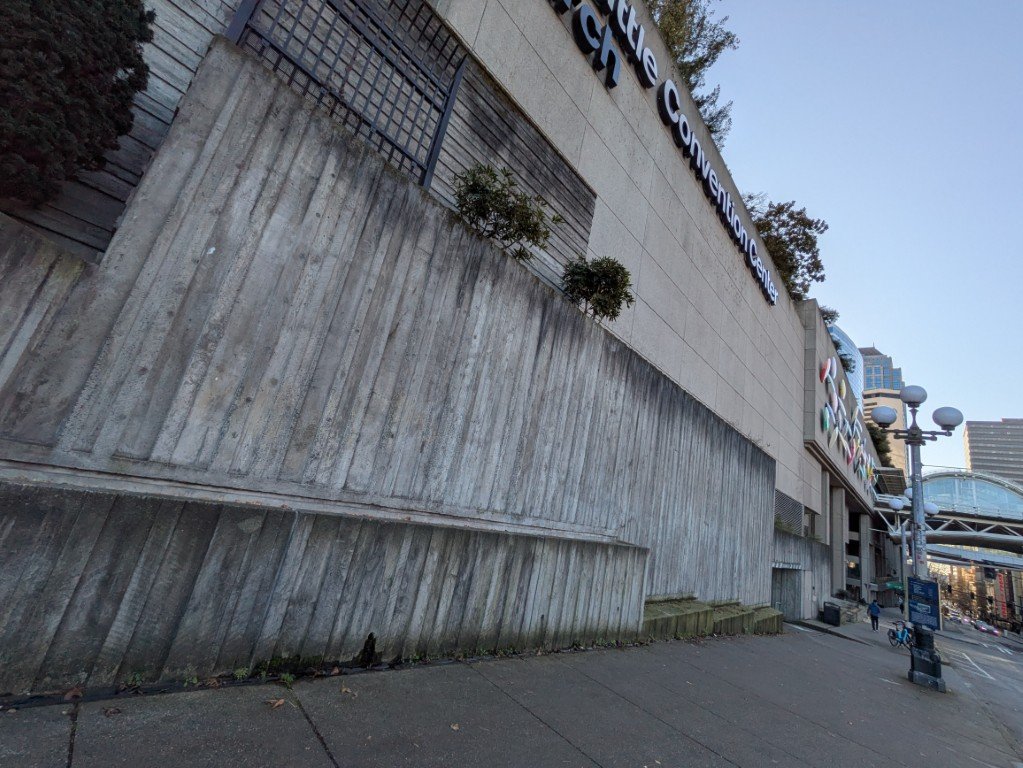
The staircase at Hubbell Place connects to a narrow walkway leading to Freeway Park.

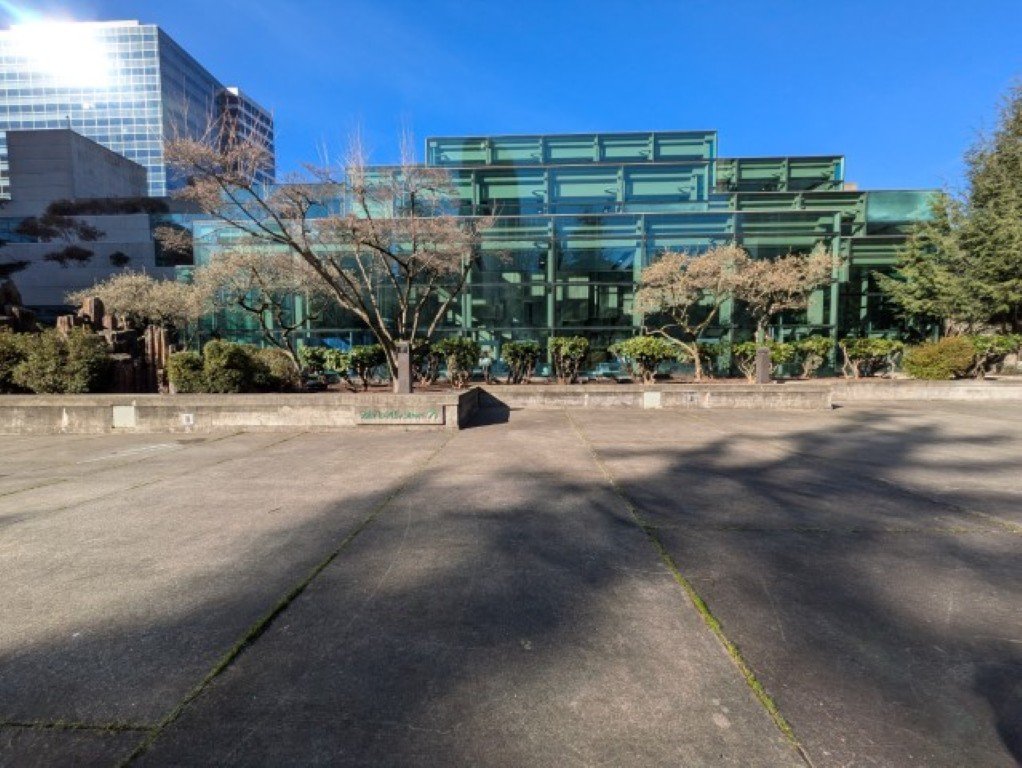
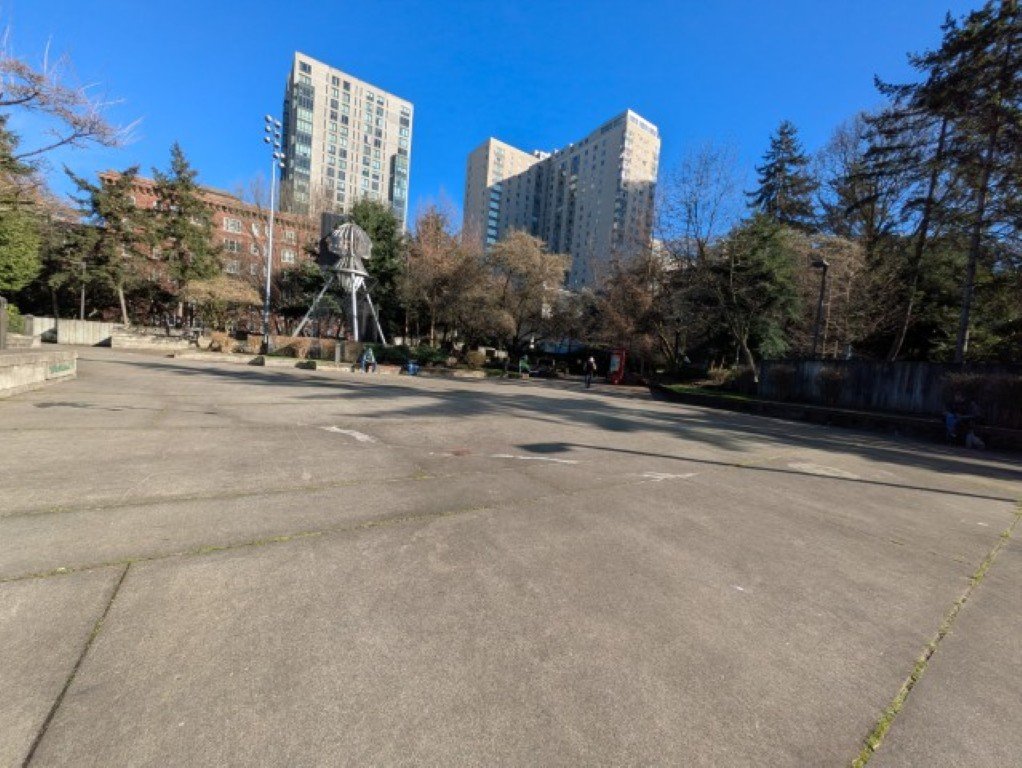
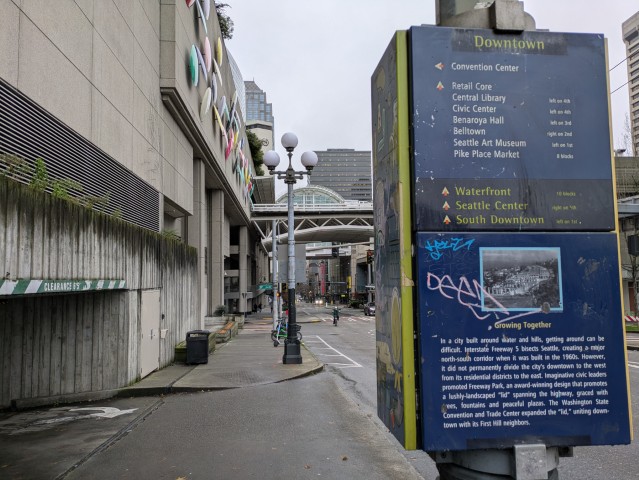
Freeway Park, opened July 4, 1976, was the first park built over a freeway in the United States. Designed by Lawrence Halprin, its brutalist landscape was celebrated when it opened.

In June 2025, police recovered shell casings from Hubbell Place after a shooting in broad daylight. In November 2025, a man was found dead from head trauma near Pike and Hubbell Place—right on this very corner. The medical examiner later ruled it an accidental drug overdose, not a homicide. In January 2026, two men were stabbed and robbed in Freeway Park at 6:30 in the morning.

The park's fountains have been off since 1992.

Status Quo

The trajectory here is set by budgets, and every budget that matters is going the wrong direction.

Seattle closed a $250 million shortfall for 2025-2026 and is already projecting another $140 million gap for 2027.18 Federal funding for Medicaid, housing, and behavioral health is being cut, and no level of government below is backfilling it.

SPD had 924 deployable officers as of spring 2025—the lowest since the 1990s—against a staffing target near 1,300.21 Washington State has the lowest number of law enforcement officers per capita in the country.22

Seattle Parks can't fund the Freeway Park renovation it already promised. The $10 million pledged as part of the Summit construction agreement has come in over budget, the project has been broken into phases, and the phases don't have timelines.

The Arch stays dark. The park stays dangerous. The sidewalks stay empty enough that strangers have to coordinate safe passage for each other.

My wife walks this block every weekday morning and evening. Yesterday she came home with a story about a man lurching across the sidewalk, waving his arms and yelling—she waited until another pedestrian was heading the same direction before she'd walk past. Someone coming the other way saw her hesitation and signaled her through, waited for her. That's how residents navigate this block. Not with an app or a safety plan. With strangers looking out for each other because there aren't enough people around to make the sidewalk feel normal.

Full disclosure: I own property on this corridor. Bought in early 2021 for the low four-hundreds. Current value somewhere in the mid-three-hundreds—roughly 15 to 20 percent below what I paid, and still falling. I have skin in this. So does every other resident, renter, and business owner between the Market and Capitol Hill.

Seattle Commons

Horizon House sits on the other side of Freeway Park—about 480 residents, founded in 1961, the first retirement community in downtown Seattle.23 They run 60-plus resident-managed committees. Their Elections Forums Committee hosts every candidate running for anything in this city. They are members of the Jim Ellis Freeway Park Association. They are among the park's most frequent visitors, and the park would be significantly worse without their constant presence and care.

Right now, Horizon House is building a 33-story West Tower—202 new units, bringing their total to 529 independent living apartments, with terraces connecting directly to Freeway Park. First move-ins in 2029.24 That's 500-plus engaged, educated, civically active residents who will use Freeway Park as their front yard.

And what is the convention center to them? A shortcut. You can take the elevator from the Union Street entrance up to the fourth floor, walk through to the atrium level, and exit to Freeway Park, adjacent to their residence.

Now imagine what it looks like if the Arch is open 365 days a year. Lectures. Civic forums. Concerts. Every day.

And not just for Horizon House. For the AVIA residents. The First Hill medical workers. The Capitol Hill neighbors who currently avoid this corridor. Anyone in the city who needs a reason to come to Pike Street that doesn't depend on a convention schedule.

A building that brings thousands of people to Pike Street every day doesn't just activate the sidewalks—it activates the park behind it.

Freeway Park's fiftieth birthday present isn't a renovation budget. It's neighbors.

5

9th & Pike

Pike
Stop 5 photo Stop 5 photo Stop 5 photo Stop 5 photo Stop 5 photo
Now

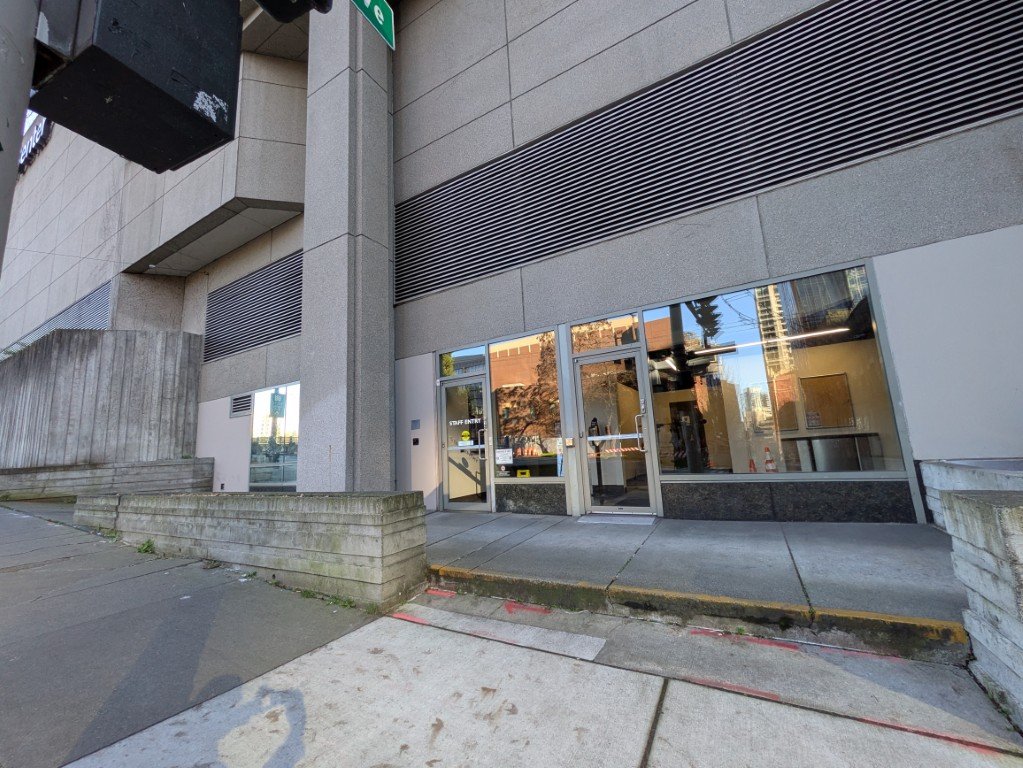
The Arch staff entrance has the Security desk—they're always on duty, and they can always call the police for you if you need it. I worked at the Seattle Convention Center from February to December 2023 as an admission attendant. This was my entrance when I was assigned to the Arch. On days you're assigned to the Summit, you use a separate staff entrance over there. You never have to come to this part of Pike Street at all.

Status Quo

To build the Summit, the SCC borrowed over a billion dollars in bonds backed by King County lodging tax revenue. The bet: more convention space brings more hotel guests who pay more hotel tax, which pays back the bonds, with both buildings pulling their weight.

Now the SCC's own CEO calls the center's position "fragile." The math isn't working.

So what happens next?

SCC goes looking for more public borrowing—state, county, city—to shore up operations or renovate the Arch. Convention centers have a way of finding money. But it takes time, and this corridor pays the price while they look.

If they don't get the money, that's when the cuts start. Reduced staffing, deferred maintenance, fewer hours. The security desk at the staff entrance we're standing next to—the one that's always staffed, the one that can always call the police for you—gets cut to event days only. Then the building goes dark entirely while they look for a buyer or a deal.

And if sale or redevelopment is on the table, what happens to this block? A buyer for an encumbered 435,000-square-foot building over a freeway isn't closing in six months. You're looking at years of negotiation and then a decade of construction.

Either way, this corridor spends years deteriorating—either as justification for why something drastic needs to be done, or because nobody's coming to help at all.

Nobody in politics wants this corridor in the news. So eventually, the convention center gets what it wants.

Seattle Commons

Where does a book club meet? Where does a neighborhood choir rehearse? Where do residents organize around a local issue when the only available rooms charge market rate?

Coffee shops, churches, music venues, and restaurants that doubled as gathering places are disappearing and not being replaced. The spaces that used to absorb this kind of activity are vacant or converted or priced out of reach. Libraries are slammed, community centers are overbooked months out, and the only other option is $75 an hour on Peerspace.

And here is a public building on Pike Street, connected to transit, adjacent to a park, with meeting rooms, ballrooms, exhibit halls, a drop-off area, a truck bridge for loading, and a security desk. It was built with public bonds, sits on public land, and is, by charter, supposed to deliver civic benefit to this community.

That's the case for the Seattle Commons. The Arch is a public asset. Let's use it like one.

6

Pike, 9th to 8th

Pike
Stop 6 photo Stop 6 photo Stop 6 photo Stop 6 photo Stop 6 photo Stop 6 photo
Now

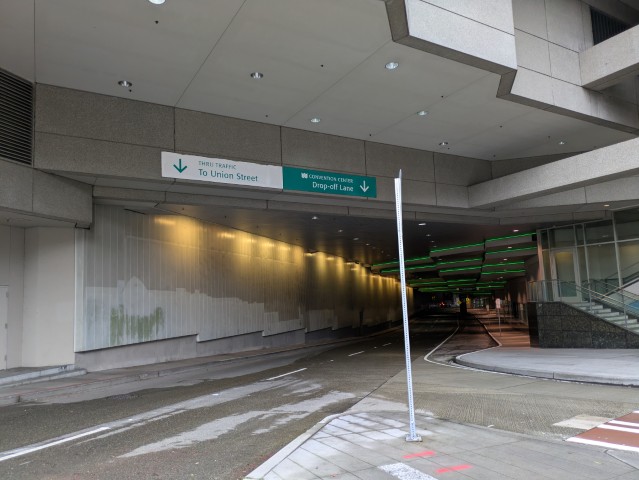
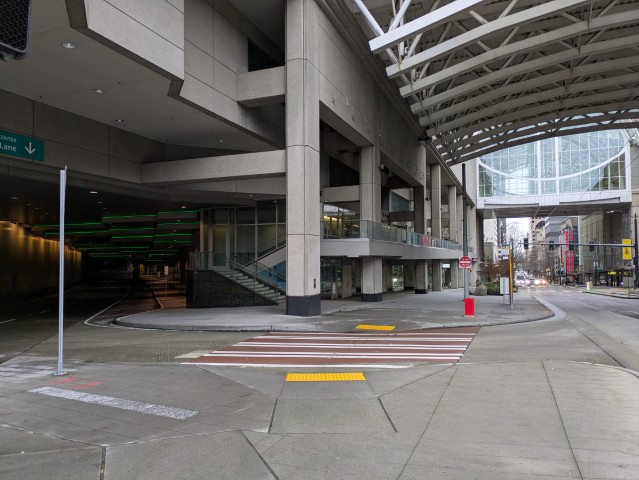
To your right, Daawat Grill & Bar. To your left, no sign on the door—those are the SCC offices, formerly Gold's Gym. The admin entrance is inside the building. From the street, it's concrete, glass, and fire exits. Above your head, the truck bridge—load-in access to the 4th floor exhibit halls.

Here's something you may not appreciate about the Arch: it's well designed for truck traffic. Coming from I-90, you take exit 2C, then the right exit onto 7th Ave toward Madison, continue two blocks to Seneca where 7th becomes Hubbell Place, and you're at the loading dock. One turn. A mile and a half. Five minutes. The dock is on the same floor as the exhibit halls—Level 4 on both sides of Pike. Trucks roll in, unload, and roll out. Eighteen bays, sixteen-foot clearance, seven bays fit a sixty-five-foot trailer.

Now try the Summit. From I-90, there is no direct route. The SCC's own directions tell you to get on I-5 North, drive past the building, exit at Mercer Street in South Lake Union, loop through Fairview Avenue, and come back south on Boren. Three to four miles. Ten minutes. To reach a building you already drove past.

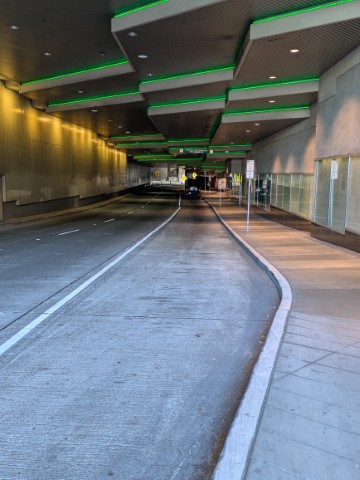
When you get there, you drive a nearly 360-degree helix down to the below-grade exhibition level. The SCC's own website warns: "Please do not attempt to take a left going northbound on Boren." If you miss the approach, you're circling downtown in a semi.

The Arch was designed for trucks. The Summit was designed despite them.

Status Quo

At the Arch, the loading dock and the exhibit halls are on the same floor. A pallet comes off a truck and rolls to where it's going. One move.

At the Summit, everything loads through the below-grade EX level. If your event is in the lobby, you're riding a cargo elevator. If it's in the 58,000-square-foot ballroom on Level 5, that's five-plus floors up—every pallet, every booth panel, every piece of staging. Three freight elevators serve the entire building. They were originally spec'd at 20,000 pounds each; the engineers downgraded them to 15,000 for safety at full building height. Three elevators, fourteen service levels, 233 feet of vertical travel.

The decorator crews who assemble and disassemble convention booths bill by the hour. They want in and out—not up and down. Every elevator trip is time. Time is money. And the elevator is a bottleneck: three cars serving the whole building means crews wait. At the Arch, move-in is horizontal—parallel, fast, as many crews as you have dock bays. At the Summit, move-in is vertical—sequential, slow, as fast as your slowest elevator.

Now multiply that across a year. Sixty-one elevator and escalator units requiring maintenance—$8.5 million in contracts just to keep them running. That's more than twice what the Arch spends on all repair and maintenance for the entire building. The Summit has 42 escalators. The Arch has a truck ramp.

Seattle Commons

Here's what a truck driver sees that a financier might miss: the Arch works. It's simple. It's horizontal. Trucks get in, trucks get out, crews do their jobs, and the building doesn't fight them. The Summit is a genuine architectural achievement, but every load-in costs more, takes longer, and depends on three elevators that were downsized before they were installed.

The SCC doesn't need two buildings it owns. It needs one building it operates and one it can access. The Summit is where the convention business lives—purpose-built, newer, bigger exhibition space, the ballroom the industry wants, and the one that Visit Seattle actively sells. The Arch is the one that's easier to load, easier to reach, and empty most of the year.

The city buys the Arch. The SCC leases it back for the days it needs it—the flexibility of two buildings without the cost of owning both. The SCC's balance sheet gets lighter. The city gets a 435,000-square-foot building on Pike Street.

We'll get into how that works—the contracts, the staff, the programming—as we continue the tour. For now, stand here and look at this truck bridge. It was built to move things efficiently into a public building. The question is whether the only things worth moving in are convention booths.

7

8th & Pike

Pike
Stop 7 photo Stop 7 photo Stop 7 photo Stop 7 photo Stop 7 photo Stop 7 photo Stop 7 photo Stop 7 photo Stop 7 photo Stop 7 photo Stop 7 photo
Now

Let's stop at Ethioblue for a cup of self-serve coffee, for about $2 last time I checked.

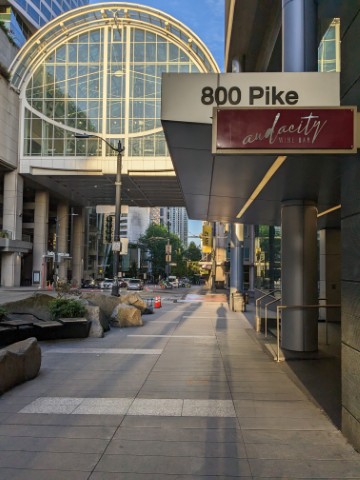
From here, the nearest entrance to the Convention Center is right across the street at 800 Pike. But other than for GeekGirlCon, SEIU, and a handful of other events, you won't go through those doors. Instead, you'll enter from the top floor after crossing the Skybridge.

I can see you're confused, so let's do a quick orientation.

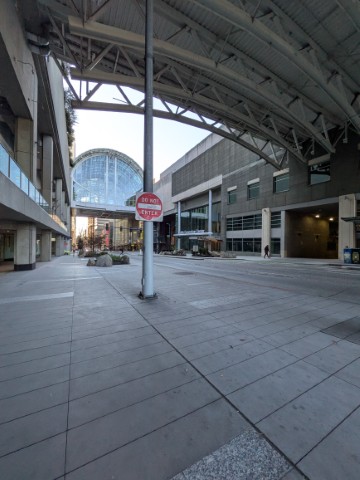
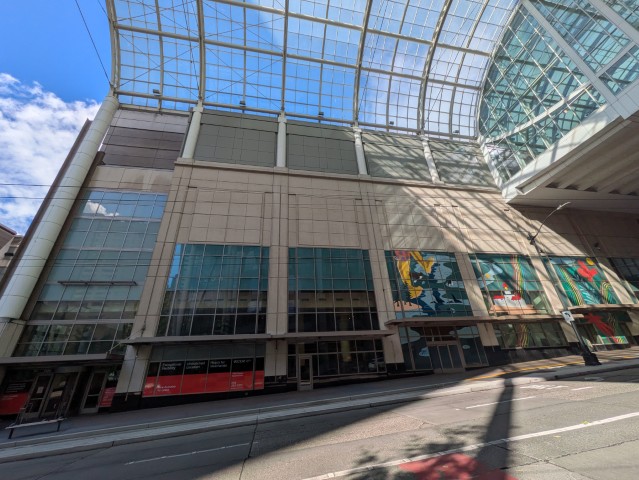
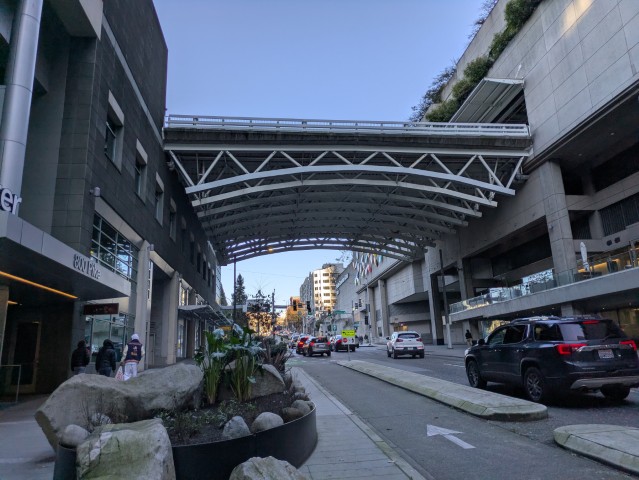
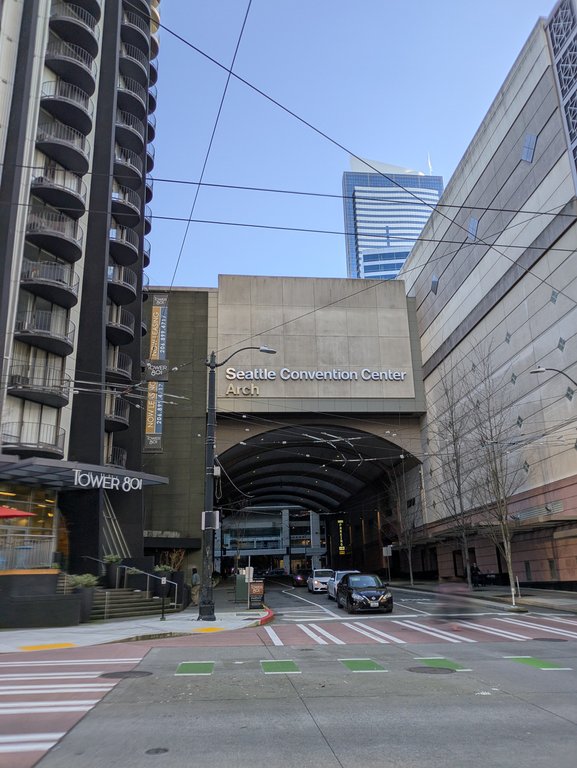
Look up at the Arch, that big glass-and-steel structure spanning Pike Street. That's called the Skybridge. From the Skybridge you can get to Exhibition Halls 4A and 4B to your right, and 4C to your left. And from 4C you can keep going to 4D and 4E.

If you're heading to the Skybridge, you'll almost always go through the 705 Pike entrance on the next block. Take the North Escalators (NOT the Galleria Escalators!) to the fourth floor, and then go through the Skybridge into the North building.

And if you're at an event in 4A or 4B with breakout sessions, find your way to the NE corner of the exhibition hall to find the escalator that takes you directly into the 800 Pike facility.

If you ever do make it inside, 800 Pike really is a lovely building.

Status Quo

Say you're planning a local event. A few hundred people, maybe a thousand. You need a big room for your general session and smaller rooms for breakouts. You call the convention center. They've got three options for you.

If you've got the budget, the Summit gives you a brand-new 58,000-square-foot ballroom with 60-plus meeting rooms, closer to the hotels, LEED Platinum, the works. That's the flagship. That's what Visit Seattle sells to national conventions. You can have it too—for a price.

The easy call is the Arch sixth floor. A 45,000-square-foot column-free ballroom with 20 meeting rooms on the same level. Parking garage with 1,500 stalls right below you. Your attendees walk in at 705 Pike, take the Galleria escalators to the top, and then into the Atrium and up another set of escalators. Catering comes directly from the kitchen, AV rolls in from storage, everyone knows where they're going. It just works.

And then there's 800 Pike—the building you're looking at. But you already know the problem: attendees have to enter at 705, escalators up, cross the Skybridge, and come back down. Or you have to set up registration at 800 Pike in a space that's not really designed for it. Most planners don't bother.

Which is why 800 Pike only gets booked when a client needs one very specific thing: a full-sized exhibition hall on Level 4 with breakout rooms attached. That combination—big expo floor plus small rooms nearby—is the one thing 800 Pike does that the sixth floor can't. But it's a narrow requirement, and most local events don't have it. For everything else, the sixth floor wins without trying.

Seattle Commons

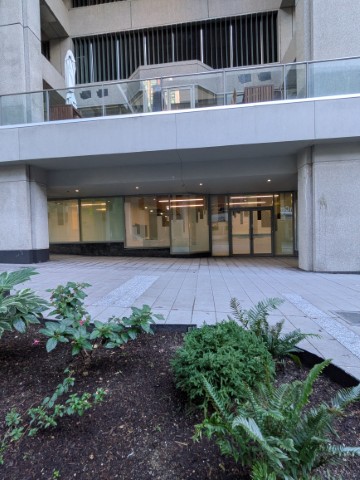
The first Seattle Commons sign goes up right here at 800 Pike.

You walk in from 8th & Pike—the street-level entrance that's been locked for years—and someone talks to you. Not Seattle-style, where we pretend you're not there. Actually talks to you. Welcome to the Commons, here's what's happening today. There's a ceramics class at two. There's a talk in Chelan at three. Andante opens at five. We're working on a jigsaw puzzle if you want to sit down.

The Commons isn't a library. You walk in and you're part of something. The host finds you a seat and a project—mending clothes, sorting seeds for the community garden, or a board game that's been running since lunch. Upstairs, a city council candidate is taking questions in a room that holds three hundred. Down in Tahoma, someone's screening a film. The maker space on Yakima level has a weekend class that's been full since it opened.

And Andante—the wine bar next door, closed for years—is open again. Because there are people on the sidewalk at 7 PM.

The tunnel on 8th that people avoid? It's how you get from the Commons to Pine Street. It has foot traffic now. Not because anyone redesigned it—because there's somewhere to go on both ends.

8

Pike, 8th to 7th

Pike
Stop 8 photo Stop 8 photo Stop 8 photo Stop 8 photo Stop 8 photo Stop 8 photo Stop 8 photo Stop 8 photo Stop 8 photo
Now

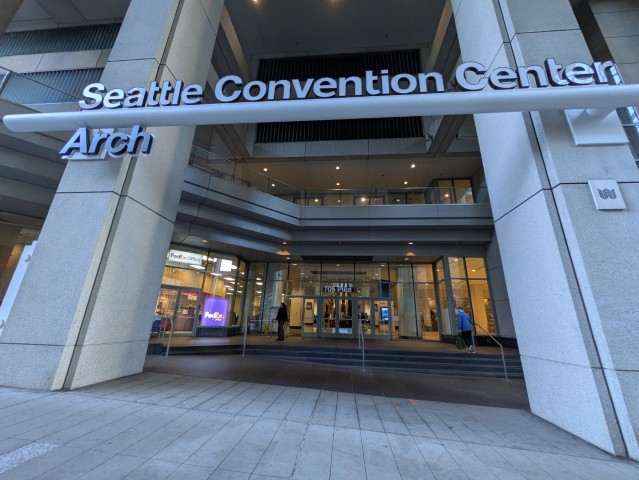
Main entrance, 705 Pike. Let's go in.

Past the FedEx—the guys in there are great, by the way—and there's Espresso Caffé Dior on your right. Past the fountain, if they're open, you'll find Pike Heat on your left, Taco Del Mar on your right, and then The Stamp and Coin Shop, which has been here since the '80s. Bathrooms on the first floor are open to the public—one stall, half-height doors, because that's the one that's open to the public. There's a seating area usually roped off "for convention attendees only."

Keep going. Exits to the drop-off area on your left in the tunnel. All the way at the end, a commercial restaurant space. Unlisted on the directory. No name on the door. I've been inside—there's a bar with empty shelves behind it, like the owner skipped town and the bank came for everything but the fixtures. Next to it, the entrance to ACT Theatre—which is wrong on at least three levels. One, it's no longer an entrance, you have to go around. Two, ACT recently merged with Seattle Shakespeare to form Union Arts Center. Third, and this is the biggest wrong of them all, Seattle's theater groups are forced to merge to survive.

At the other end, the exit to Union Street. So if you want to cut through from Pike to Union, you can, and if you like, you can buy rare coins or get a burrito on the way.

Let's double back and take the Galleria escalators up. Second floor: SCC Admin offices on your right, seating area on your left. Keep going. Third floor: entrance to the parking garage—this is how you get to your car if you parked in the Pike Avenue garage between Terry and 9th. But we walked here, so we keep going up to Level 4.

Now we're at the top of the Galleria escalators. To your right, where a Subway used to be—closed for decades. To your left, the Atrium Lobby doors ---always locked unless there's an event--- and the doors to outside, which is Freeway Park.

If you're allowed into the Atrium Lobby, you're either directed up another set of extra-long escalators to the sixth floor, or into the Atrium itself, which opens to the 4A and 4B exhibition hall entrances. The Atrium is a big open space that usually holds registration desks. You register in the Atrium, we check your badge, you enter the hall.

But there's nothing going on today. So all we can do is look at the locked Atrium doors and head back down on the same escalators that brought us up. On the way out, let's peek at the Visit Seattle welcome booth. No event today, so it's unstaffed. You can pick up a brochure, though.

Thank you for your visit.

Status Quo

You just walked through a building that has almost nothing happening on any given weekday. The ghostly shell of a restaurant, an unused space that was once a Subway counter, a roped-off seating area, an unstaffed welcome booth. Five floors of meeting space and exhibition halls and ballrooms and a theater entrance, all of it clean and lit and maintained and most days empty.

The people on the second floor in the SCC administrative offices see the same building you just saw, and they also see the numbers.

The Arch broke even in 2019 as a single building—$37 million in revenue, $37 million in expenses, $74,000 in operating income.30 Then the Summit opened. Revenue across both buildings went up 58 percent, but expenses went up 103 percent.31 The annual report shows a $16 million operating loss for 2024. The audited financial statements—which include the $53 million in annual depreciation that the annual report leaves out—show a $69 million loss.32 Reserves have dropped from over $200 million to roughly $25 million.11 Net position is declining by $35 to $38 million every year, which means the organization is spending down its balance sheet at a pace that reaches zero within a decade.32

The people down the hall know these numbers better than we do. And in September 2024, the board made a decision about what to do about them. They conducted a national search for a new CEO and hired Jennifer LeMaster.33

LeMaster didn't come from convention centers. She came from the Georgia World Congress Center Authority, which operates what it calls a "Championship Campus"—the Georgia World Congress Center, Mercedes-Benz Stadium, Centennial Olympic Park, and the Signia by Hilton Atlanta.34 Her 26-year career started in college athletics at the University of Kentucky and moved through the Georgia Dome, where she managed $22 million in annual revenues and oversaw a $30 million renovation of the club seats and suites.33 When the $1.7 billion Mercedes-Benz Stadium replaced the Georgia Dome, she led public affairs during its development and then oversaw three rounds of strategic planning—Vision2020, Vision2025, and Vision2030—that repositioned the entire GWCCA campus from a convention center into a combined convention, sports, and entertainment destination.33 She was also the project development lead for the $520 million Signia by Hilton Atlanta, which GWCCA describes as "the first publicly owned, publicly financed convention hotel on campus."3334

That's the résumé. Convention center to stadium to hotel, each one publicly owned and publicly financed, each one part of a deliberate strategy to diversify beyond conventions into sports, entertainment, and hospitality. The board didn't hire a convention center operator. They hired the person you bring in when you've decided the convention center model isn't enough anymore and the campus needs to become something bigger.

Three months after LeMaster started, the SCC announced that its longtime Director of Sales, Michael McQuade—who had been with the center since 1988—would transition to a new role as Senior Advisor for Commercial Strategy, where he would "evaluate tradeshows, sports and special event opportunities for the city."35 The center simultaneously announced a search for a Vice President of Commercial Strategies with "a proven track record of diversifying and driving revenue growth," and a Campus Master Plan process for 2026 focused on "delivering clean, safe, and secure environments for visitors, guests and residents alike."35

That language is clear. The convention center is exploring sports and special events. It's hiring someone whose job title includes the word "diversifying." And it's launching a master plan for the entire campus—both buildings—in 2026.

That kind of pivot always requires public money. It did in Atlanta, where every major facility on the GWCCA campus is publicly owned and publicly financed. The Summit was $1.9 billion in public bonds. If the pattern holds, the next step is a feasibility study, followed by economic impact projections, followed by a pitch to the legislature or the county or the city to reposition the Arch for a new mix of sports, entertainment, and special events that the convention model alone can't sustain.

Maybe that's the right call. LeMaster knows more about running these buildings than anyone on this tour, including me, and the GWCCA model has been successful in Atlanta. But before that pitch gets made—before the feasibility study is commissioned and the economic impact numbers are projected and the legislative ask is drafted—we should talk about a different idea for what this building could become.

Seattle Commons

Here's what we're proposing.

The Seattle Convention Center doesn't need two buildings. It needs one building it operates and one it can access. The Summit is purpose-built for conventions—the ballroom the industry wants, the LEED Platinum certification, the exhibition space Visit Seattle actively sells. The Arch is a 435,000-square-foot horizontal building with a truck ramp, 1,500 parking stalls, 68 meeting rooms, a connection to Freeway Park, and a loading dock on the same floor as the exhibit halls. It broke even as a solo operation in 2019. It's been the overflow building ever since the Summit opened, and the two-building model is losing $38 million a year.

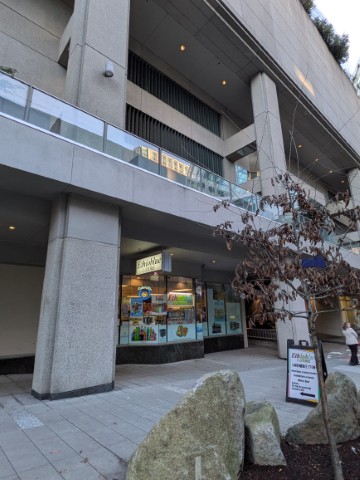
The proposal: the city takes over operations of the Arch. The SCC retains access for the days it needs it—conventions that require both buildings, overflow events, the handful of bookings that still need the Arch's exhibition halls. The rest of the year, the building is open. A public commons, operated by Seattle Center, programmed for the city, seven days a week. The 800 Pike building—sitting on regular land at 8th and Pike, with its own street-level entrance—is the natural front door.
That's the idea. Now here's what has to move to make it work.

The contracts. Four exclusive national contractors—Aramark for food, Encore for AV, Smart City for WiFi, Edlen for power—control the Arch's revenue model and make the building unaffordable for anyone who isn't running a multi-day convention. Aramark alone is $38 million a year in food service revenue, the SCC's single largest line item. Their contract expires January 2, 2027. That's the hinge. If the board exercises its renewal option, the building stays locked into convention-only food service until roughly 2029. If the board doesn't renew, January 2, 2027 is the opening. The exclusive catering model goes away. A food hall replaces captive catering. The price of hosting a hundred-person event starts dropping toward the marginal cost of the room. The other exclusive contracts—Encore, Smart City, Edlen—have their own timelines, and unwinding them follows as those terms expire or are renegotiated. But Aramark is the first domino. Once the food monopoly breaks, the building becomes a different kind of space.

The staff. The Arch has union staff—security, maintenance, operations, the people who keep the building running. A Commons needs every one of them, and it needs them full-time, not on the event-day scheduling that leaves workers underemployed between conventions. Year-round programming means year-round shifts. That's more union hours, not fewer. What goes away, over time, is the contractor layer—and what replaces it is a food hall with independent operators, built-in AV, and open WiFi. The union jobs stay and get better. The contractor monopolies end.

The operator. Seattle Center already runs the Armory food hall, McCaw Hall, KEXP, MoPOP, and the Space Needle campus. They program events, manage vendors, handle crowds, maintain public buildings, and do it 365 days a year. That's the job. The Arch is a better building for it than anything Seattle Center currently operates—horizontal, transit-connected, adjacent to a park, with commercial kitchens, loading docks, and meeting rooms already built. Seattle Center doesn't need to build anything. It needs to open what's there.

The money. The convention center's $1.9 billion in bonds are secured by lodging tax revenue—a 7 percent tax on hotel rooms in Seattle and 2.8 percent in King County. Here's what matters: the bonds are not secured by the buildings. The bondholders' claim is on the tax stream, not on the Arch. Separating the Arch from the PFD's operations doesn't impair their collateral. The tax is collected on hotel rooms whether the Arch hosts conventions or a food hall.

What the bondholders get is safer paper. A convention center burning $38 million a year in net position, with reserves dropping from $200 million to $25 million, is a deteriorating credit. A restructured operation—Summit handling conventions, the Arch's operating costs off the PFD's books—stabilizes the balance sheet. That's better for the bonds.

It's also better for the city. Right now, if SCC can't service its debt, the public is on the hook through the lodging tax backstop. Fewer buildings on the PFD's books, less exposure. Yes, the city takes on operating costs for the Arch—but Seattle is already paying for a dark building through lost tax revenue and a dead neighborhood. The question is whether you'd rather pay for an empty one or an active one.

And the hotels paying 7 percent of every room night get a return on their money for the first time. A Commons that puts daily foot traffic on the Pike Street corridor—past the Sheraton, the Thompson, every hotel on this walk—gives them something the convention model never has: a neighborhood worth visiting on the days between conventions.

The governance. The PFD is an independent governmental entity created by the state legislature and governed by a nine-member board—three appointed by the governor, three by the King County executive, three by the mayor. The same political actors who would need to approve the Commons are the ones who appoint the board. This isn't a hostile acquisition. It's a restructuring of which public entity operates which building. And there's precedent: in Tacoma, a PFD created a convention center and then delegated operational authority to the City of Tacoma through an interlocal agreement. The PFD retained ownership. The city operated the building. The same structure works here—PFD retains ownership of the Arch, satisfying bond covenants, while the city operates it through Seattle Center. No asset transfer. No bondholder trigger. An interlocal agreement between public entities that already share a board.

What we don't know yet. The bond indentures—the actual covenant language—need review by municipal bond counsel. Resolution 2010-12, the governing document for the PFD's financial commitments, may contain operational requirements that reference the Arch specifically. The PFD's enabling statute may restrict operational agreements to convention-related uses—or it may be flexible enough to encompass Commons programming. The Arch is built over I-5 on an air rights lease from WSDOT—the convention center pays for the right to occupy the space above the freeway. The lease runs to roughly 2050 and would transfer as part of any operational agreement, as it did when WSDOT cooperated on the Summit expansion in 2019. These are questions for lawyers, not for flaneurs on a walking tour. But the structural answer is favorable: the bonds are secured by tax revenue, not buildings. The governance is appointee-based—the coalition that approves the Commons is the same three offices that appoint the board. And the Tacoma model proves that PFD-to-city operational delegation already exists in Washington State law.

That's the proposal. The rest of this walk is the details—who goes, who stays, what the building looks like, what happens to the neighborhood when the doors open. But the structure is this: Summit stays a convention center. The Arch becomes a commons. Seattle Center operates it. The bonds get paid. The corridor comes alive.
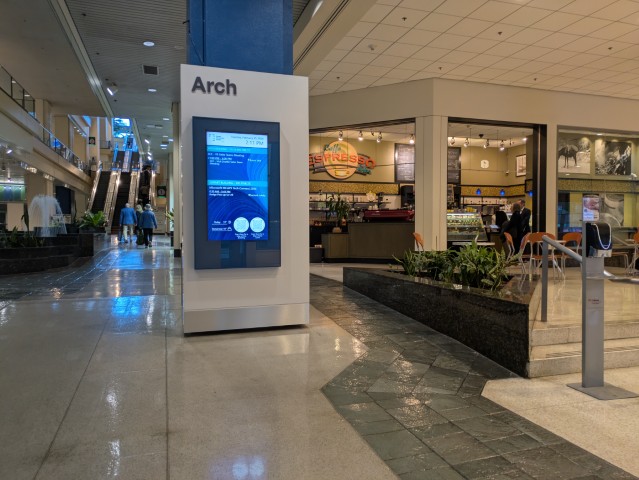
THE KINGMAKER

Now the politics.

Seattle can't do this alone. The mayor appoints three of nine PFD board members. That's not a majority. And there's a harder problem: Bellevue doesn't want Seattle to fix this.

Every convention that leaves the SCC because of cost or dysfunction is a convention that might land at Meydenbauer. Every room-night that shifts east is taxed at 13.8 percent instead of 18, in a city that just expanded its convention center and is about to get a rail connection to Westlake, the U-District, and SeaTac with a transfer. Bellevue in 2026 isn't a suburb waiting for Seattle's overflow. It's a co-equal city with its own convention facility, its own corporate base, its own hotel inventory—and a rational incentive to let Seattle's convention center problems persist.

The governor can worry about the bond backstop, but the state's preference is to avoid writing checks, not to broker deals between cities. The backstop—a provision in the PFD's enabling statute that treats any shortfall in debt service as a loan from the state—expires in 2029. After that, if reserves are gone and lodging tax doesn't cover the bonds, there's no automatic rescue. The governor's incentive is to make sure that doesn't happen. But the governor doesn't run convention centers.
The only authority that sits above both cities is the King County executive.

King County created the PFD by ordinance in 2010. The county's hotels—Seattle and Eastside—pay the lodging tax. The county offered $100 million during COVID when the SCC couldn't finance the Summit. Sound Transit sold the Convention Place property to the PFD for $161 million—$20 million cash and a 30-year promissory note—and has a direct financial interest in the PFD's continued solvency. The KC executive appoints three of nine board members. And the KC executive has a relationship with Bellevue's leadership that neither the governor nor the mayor can replicate—because the county is the jurisdiction that contains both cities.

Here's what the KC executive sees: two publicly funded convention centers in the same county, taxing the same hotel base, connected by a twenty-five-minute train ride, competing with each other for the same mid-size bookings. One is a 54,000-square-foot facility that runs 300 events a year, stays solvent, and just completed a major expansion. The other is burning through reserves at $35 million a year, and its own CEO calls the situation fragile. The county is funding both sides of a competition that neither side can win cleanly.
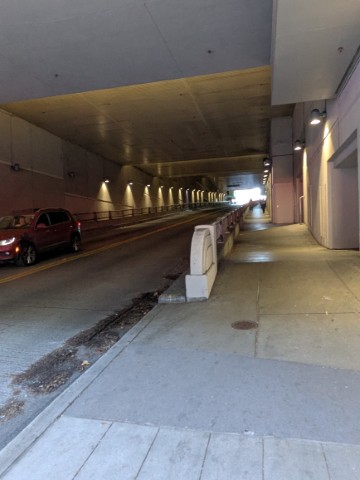
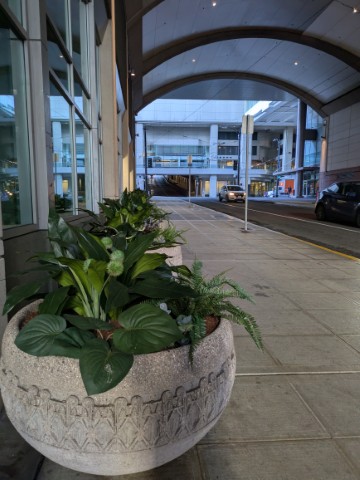
The answer is to stop competing. King County Conventions: one regional entity, one sales team, one brand. The Summit handles the national-scale conventions that need 400,000 square feet—events Bellevue physically can't host. Meydenbauer handles the mid-size market where Bellevue's hotels, restaurants, tax advantage, and Crosslake access make it the stronger pitch. A planner calls KCC and gets directed to the right venue. The two facilities stop cannibalizing each other and start selling a region.

One CEO. One finance office. One marketing budget. The operations staff stays local—each building needs its own crew running the physical plant and managing events day-of. But the duplicated executive layer, the competing sales teams, the redundant back office—that consolidates. The SCC's operating costs went up 103 percent when the Summit opened because the organization was built to run one building and suddenly had two. KCC doesn't add overhead. It reduces it.

And who runs it? One organization has been self-sustaining for thirty years, completed a major expansion, and operates 300 events a year in a facility its market demands. The other took on $1.9 billion in debt for a building that came in $300 million over budget, watched its reserves drop from $200 million to $25 million, and is now exploring a pivot into sports and entertainment—business lines it has never operated, in a facility not built for the job, in a city that already has a stadium, two arenas, two major concert halls, and countless smaller venues. If a corporate board were looking at two divisions with these track records, the answer would be obvious.

Crosslake makes Bellevue a credible convention city. It also makes Bellevue the natural operator of the regional convention business. A Meydenbauer attendee can be at Pike Place Market in twelve minutes, at a Husky game in twenty, at SeaTac in under an hour with one transfer. The train does what used to require staying in Seattle. "Book Meydenbauer, visit Seattle" is a stronger regional pitch than two public facilities undercutting each other—and the Commons is what makes the pitch work. A living Pike Street corridor between the Market and Capitol Hill generates daily foot traffic at Westlake Station, daily visitors to Pike Place, daily customers for every hotel and restaurant on this walk. It isn't a competitor to Bellevue's convention business. It's an amenity that enhances it. The train connects them. The Commons gives the connection a reason.

Now count the votes. The KC executive's three board appointments, plus the governor's three—that's a majority. The governor's incentive is straightforward: restructure before 2029, or face a legislative fight over extending the backstop for a facility the market is abandoning. The KC executive's incentive is the deal itself—stop the bleeding, rationalize the competition, elevate Bellevue into a regional anchor, and resolve a structural conflict the county is paying for on both sides. The mayor's three appointments complete the unanimity, and what the mayor gets is the Commons: a 435,000-square-foot civic space on Pike Street, the companion to the waterfront, a legacy project that didn't require a new bond issue or a tax increase.

That's the coalition. Three appointing authorities, each with a reason to say yes. A regional convention brand that's stronger than either city's solo pitch. An Arch that opens to the public. And a KC executive who brokers the deal—not as a favor to Seattle, but because the county created this structure, the county is paying for both sides of its dysfunction, and the county is the only level of government with the authority and the incentive to fix it.

The PFD was created in 2010 for a world where Seattle was the center and Bellevue was the periphery. The region spent $3.6 billion building a train that connects them as equals. The governance has to catch up.

9

7th & Pike

Pike
Stop 9 photo Stop 9 photo Stop 9 photo Stop 9 photo Stop 9 photo
Now

Cheesecake Factory—closed permanently. They can make it work in suburban malls across America but not next to a convention center in downtown Seattle.

So where do you eat?

If you're inside the Arch, there's Juicy Café on the second floor—juice and health foods, tucked in the back. It's not listed on the building directory outside. On the ground floor there's Pike Heat and Taco Del Mar. Espresso Caffé Dior does coffee. Ethioblue can sell you a PowerBar.

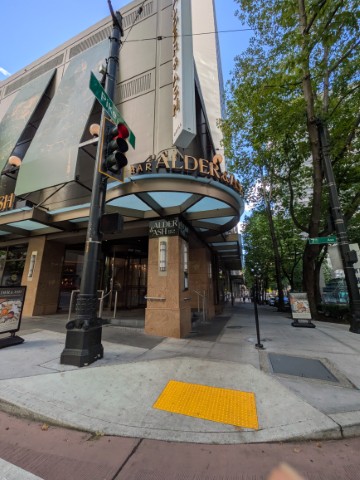
Alder & Ash is across the street at the Sheraton, 7th and Pike. Down 7th toward Pine there's a Starbucks, a New York--style deli, and Qiao Lin Hotpot—but now you're a block off Pike in a different corridor. That's about it.

Isn't there anything closer? If you exit the Arch on the second floor and cross over to the Two Union Square building, there's food—Cortina Café upstairs, and downstairs a Starbucks, sandwich shop, Mod Pizza, salad place, convenience store, dry cleaning. It's built for office workers. The sign inside Two Union says "TO CONVENTION CENTER" with an arrow. But inside the convention center?

There is, technically, a sign inside the Arch pointing to Two Union Square. It says "Two Union Square & Office Tower." Not "food court." Not "restaurants." Not "lunch this way." If you're a convention attendee looking for something to eat, the sign tells you there's an office building down the hall. You keep walking.

Why? Because the SCC collects rent from the food vendors inside its own building. Sending convention attendees next door to Mod Pizza means sending them past your own tenants. So the wayfinding is functionally one-directional: the office building advertises the convention center, but the convention center buries the return trip under a sign that says "Office Tower." The result is that 10,000 people at a convention can't find lunch, and the restaurants one floor away in the next building don't know the convention is happening.

Status Quo

The Cheesecake Factory space stays empty. Who wants to sign a ten-year lease on a corner where a Cheesecake Factory failed?

And the food problem gets worse, not better. The SCC's revenue model depends on its exclusive food service contractor—Aramark runs catering for events, and that's real money. The $38 million in food service revenue on the audited statements is the SCC's single largest revenue line. Bigger than building rent. Bigger than parking. The convention center makes more money selling boxed lunches to captive attendees than it does renting the halls they're standing in.

That creates a structural conflict. The SCC has no financial incentive to make it easy for attendees to eat off-campus. Every dollar spent at Alder & Ash or Cortina Café or Qiao Lin Hotpot is a dollar that didn't go through Aramark. The one-way wayfinding isn't an oversight. It's the business model. The building is designed to keep you inside and spending, not to connect you to the neighborhood.

Here's what that costs. A small local event—maybe a hundred people for a half-day conference, a PowerPoint and a boxed lunch—runs roughly $100 a head by the time you add room rental, catering minimums, AV, and service charges. Ten thousand dollars for a hundred people to watch slides and eat a sandwich. That's not a price that reflects the cost of making a sandwich. It's a price that reflects the cost of four exclusive contractors—Aramark for food, Encore for AV, Smart City for internet, Edlen for power—each taking their margin on a captive customer who has no alternative. The local nonprofit that could afford a room can't afford the room plus the mandatory catering plus the mandatory AV plus the $95-per-device WiFi. So they don't book. And the building stays empty.

Which means the neighborhood restaurants—the ones that could survive on convention overflow if they could reach the customers—never see those customers. And on the 300 days a year when there's no convention, the Aramark kitchen is closed, the SCC tenants are shuttered, and there's nowhere to eat on the entire block. The food desert and the food monopoly are the same problem.

Seattle Commons

The Arch has union staff—security, maintenance, operations, the people who keep the building running. A Commons needs every one of them, and it needs them full-time, not on the event-day scheduling that leaves half the workforce underemployed between conventions. Year-round programming means year-round shifts. That's more union hours, not fewer.

What the Commons doesn't need is Aramark.

The exclusive contractor model exists because convention centers are in the captive-audience business. You've got 5,000 people in a building for three days and they need to eat. You can charge $22 for a boxed lunch because the alternative is leaving the building, finding food, and getting back before the next session. That's a rational business model for a convention. It's a terrible model for a public building that's supposed to be open to the city.

The Commons model replaces the exclusive contractor with an open food hall. Independent operators, local restaurants, competitive pricing. Fill the Galleria with options. Turn the Atrium Lobby into a food fair. Put food carts in Freeway Park—Portland proved the model, and the park is the Arch's backyard.

There's precedent for this inside a convention center. In Philadelphia, Reading Terminal Market sits inside the Pennsylvania Convention Center—a public market that serves convention attendees and locals from the same building. The convention gets the foot traffic. The market gets the customers. Nobody had to choose.

The operators pay rent. They hire staff. Those are new jobs—and if the city structures the leases right, they're union jobs at restaurants that serve crowds seven days a week, not Aramark jobs that serve boxed lunches seven days a quarter.

What does that do to the price of hosting an event? Take out Aramark's exclusive catering and the mandatory minimums disappear. Take out the $95 WiFi and the mandatory AV and you're looking at room rental only. A hundred-person event in a publicly owned building doesn't need to cost $10,000. It needs to cover the marginal cost of the room—utilities, cleaning, setup, staff time. That might be $2,000. It might be $500 for a half-day in a smaller room. Some of it might end up subsidized, and that's a conversation worth having honestly—what's the public value of making a 300-person room available to a neighborhood choir or a candidate forum or a school robotics competition at below-market rates? Libraries are subsidized. Parks are subsidized. Community centers are subsidized. The question isn't whether a public building should cost less than a private one. It's how much less, and who decides, and what the city gets in return.

The Cheesecake Factory space becomes the corner restaurant this block has needed for twenty years—not because someone took a risk on a dead corridor, but because the building next door puts people on the sidewalk every day. The wayfinding goes both ways. The Two Union food court isn't a secret anymore. Alder & Ash gets walk-in traffic from the Commons on a Tuesday, not just hotel guests and convention spillover on event days. And the food hall inside the Commons doesn't need an exclusive contractor, because the revenue model isn't captive catering. It's a neighborhood.

10

Pike, 7th to 6th

Pike
Stop 10 photo Stop 10 photo Stop 10 photo Stop 10 photo Stop 10 photo Stop 10 photo
Now

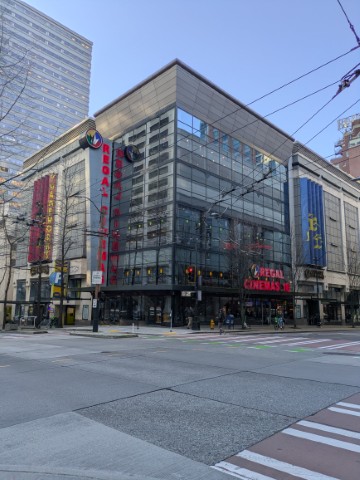
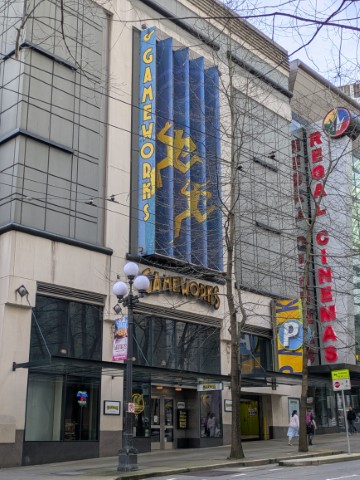
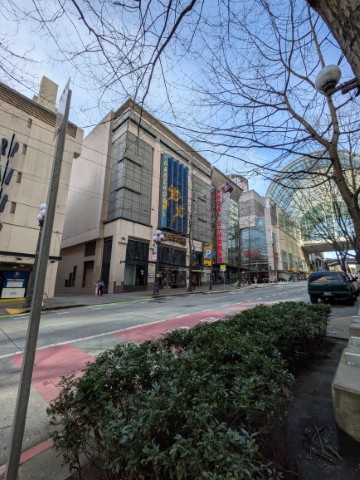
This block is screens. Regal Cinemas on your left—fourteen screens, stadium seating, IMAX. GameWorks across the street—arcade games, VR stations, esports setups.

And inside the convention center you just walked through, Encore—the exclusive AV contractor—charges event organizers thousands of dollars to set up a projector and a microphone. Smart City charges $95 per device for WiFi. Two businesses on this block are built around putting images on screens. The convention center is a third. Between them they have hundreds of screens, and on an average day, almost nobody is looking at any of them.

Status Quo

Regal Cinemas survives on a model that's under pressure nationally. Without convention center foot traffic to supplement ticket sales, this location is more vulnerable than most. GameWorks closed and then someone gambled on opening it again. The Sheraton keeps its Pike Street bar entrance locked because locking it is cheaper than staffing it. The hotel's calculation is rational: facing Pike Street is a cost, not an opportunity. That calculation doesn't change until the street does.

Inside the Arch, Encore is the AV version of Aramark—same exclusive contract, same captive pricing, same result. You already saw what that does to the building in Stop 9. The difference is that a decent projector costs $500 and a wireless presentation system costs $200. Every library branch in America has a screen and a cable and a WiFi password that works.

Seattle Commons

A publicly owned building in 2026 should have WiFi the way it has lights—it's infrastructure, not a revenue line. Every room gets a screen, a projector, a sound system, and a cable. The cost of that equipment across every meeting room in the Arch is less than what Encore bills for a single large convention.

That's what changes who uses the building. Not just cheaper food—cheaper everything. Room rental approaching marginal cost. No mandatory AV package. No per-device WiFi. But the real draw isn't the price. It's that the Python meetup is in a room next to a candidate forum next to a robotics demo, and the food hall downstairs is full, and you might walk into one event and stay for another. Any organization looking for a room thinks of the Commons first—not because it's the cheapest option, but because it's the most alive.

11

6th & Pike

Pike
Stop 11 photo Stop 11 photo Stop 11 photo Stop 11 photo
Now

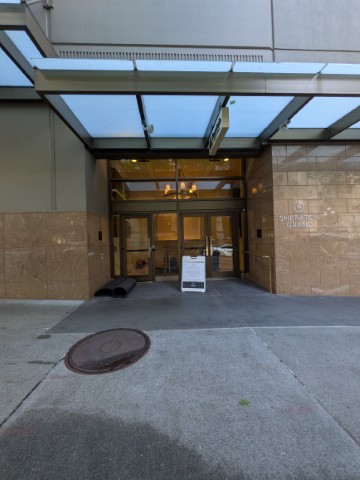
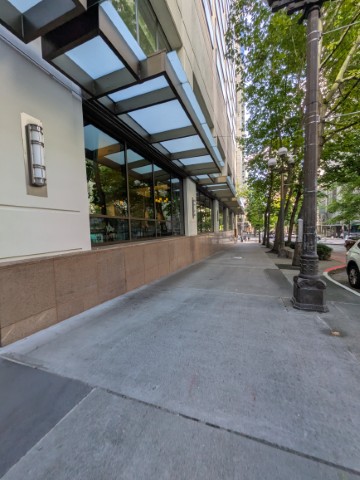
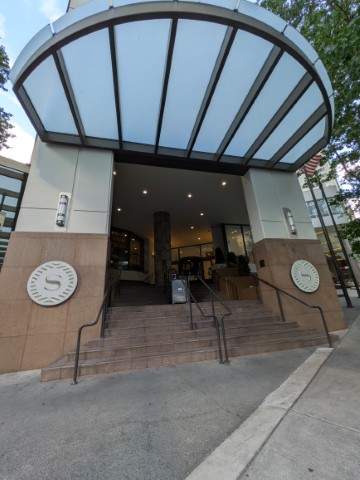
Southeast corner of 6th and Pike, the Sheraton Grand Seattle. This is the convention center's most important neighbor—when a national convention books the Arch, this is where the organizers stay, where the opening reception happens, where the shuttle buses line up.

The Sheraton's Pike Street entrance to Fountain Bar & Lounge—key-card access only. "This door requires a Guestroom card key for entry. Otherwise, please use our main Hotel entrance on 6th Avenue." The bar is right there. You can see it through the glass. But if you're not a guest, Pike Street isn't your door.

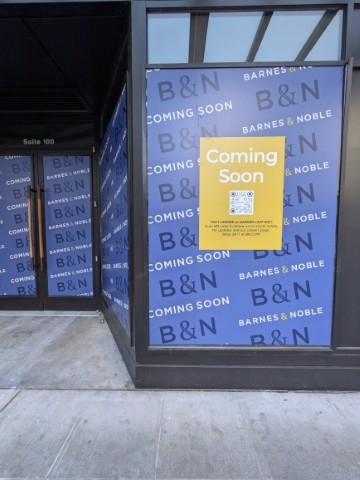
The other three corners: northwest, Barnes & Noble under construction—a bookstore betting it can make this intersection work. Northeast, the former Nike flagship, dark, Kraken hockey branding in the windows of a space that's available for lease. Southwest, the U.S. Bank Center, ground floor unfilled on this side.

Four corners. One key-carded, one under construction, one for lease, one empty.

Status Quo

Book a hotel room in Seattle tonight and roughly 18 percent of your bill is taxes and fees. The largest single piece—7 percent of your room rate—goes to the convention center. Not to the city. Not to the county. To the Washington State Convention Center Public Facilities District, to service $1.9 billion in bonds. Every hotel in Seattle pays this. Hotels in King County outside Seattle pay 2.8 percent. The 71 largest downtown hotels pay an additional 2.3 percent surcharge that funds Visit Seattle. The convention center's 7 percent generated $100 million in 2024—larger than everything the building earns from its own operations combined.

Every hotel pays. Not every hotel benefits.

If you're the Sheraton, you're across the street from the Arch. Convention planners block-book your rooms. You get 171 events a year worth of guaranteed demand—down from 212 five years ago, but still significant. Your investment in the convention center has a return, at least on event days. The other 194 days, your Pike Street entrance is key-carded shut because there's no one outside worth opening for.

If you're the Thompson Seattle or Hotel 1000—a few blocks further out, nice property, not adjacent—you get spillover. Maybe. When the headquarter hotels fill, your sales team hustles for a block of rooms. You're paying 7 percent to fund a building that primarily fills your competitors' rooms.

If you're a boutique hotel in Ballard, a bed-and-breakfast on Capitol Hill, an independent property in the University District—you pay the same rate. You get nothing. No convention planner has ever block-booked your rooms. You're subsidizing a building your guests will never enter, on a street most of them will never walk.

And if you're the Homewood Suites that used to be two blocks east of here, you looked at this math and left. Converted to apartments. Stopped paying lodging tax forever. Every hotel that follows shrinks the tax base. The remaining hotels pay the same rate on fewer rooms, supporting the same debt.

On March 28, 2026—six weeks from now—Crosslake opens. A convention attendee can book a hotel in Bellevue and be at Westlake Station in twelve minutes. The tax on that Bellevue room: roughly 13.8 percent. Seattle: roughly 18 percent. That's a four-point spread on every room night, and the train eliminates the only reason it didn't matter before.

Nobody has offered the hotels a better deal.

Seattle Commons

Start with who loses.

The Sheraton has the most to lose. Their current model is geographic monopoly on the Arch. Convention planner books the Arch, block-books the Sheraton, attendees cross Pike Street and back. The Sheraton captures food, bar, room service revenue from a captive audience that never needs to leave the two-block radius. A thousand-member association conference that stays at the Sheraton and walks to the Arch without ever touching the rest of the city—that's the ideal booking. The Commons breaks that captivity. A food hall gives attendees options. Street life pulls them out of the hotel. The Sheraton's per-event food and beverage revenue likely drops.

That's real money. It deserves an honest answer, not a hand-wave.

Here's the honest answer: the Sheraton's captive model is already shrinking. Events are down from 212 to 171 and declining. The Summit—not the Arch—is the building Visit Seattle actively sells, and the Summit's headquarter hotel relationship is with the Hyatt Regency, not the Sheraton. As conventions consolidate at Summit, the Sheraton's geographic advantage over the Arch matters less every year. Crosslake accelerates this—a convention planner who books Summit can house attendees in Bellevue at a lower tax rate and a twenty-five-minute train ride. The Sheraton's monopoly on Arch foot traffic is an asset whose value is declining—events are down from 212 to 171 and Crosslake is about to pull more of them to the Eastside. The Commons doesn't threaten that monopoly. It replaces it with something better.

Right now, the Arch is dark roughly 300 days a year. Pike Street is dead and the Fountain Bar entrance is key-carded shut. Those days generate zero walk-in revenue for the Sheraton. A Commons puts daily foot traffic on the corridor that translates into everyday bar traffic, restaurant covers, and tourists who choose the Sheraton because the neighborhood is worth staying in. The Sheraton trades declining captive revenue on event days for growing ambient revenue on every other day. Given that event days are already falling and Crosslake is about to make them fall faster, the math favors the trade.

The Hyatt Regency is largely neutral. It's purpose-built for Summit, concentrated on the convention business that stays in Seattle, and physically distant enough from the Arch that the Commons doesn't change its daily operations. If KCC consolidation routes more mid-size conventions through Bellevue, the Hyatt could lose some bookings—but as the newest, largest hotel adjacent to the region's premier convention facility, it's the last property to feel that pressure.

The hotels that win are the ones who currently get nothing. The Thompson, Hotel 1000, Motif—they don't have a captive convention relationship to lose. They're paying 7 percent for a building that fills someone else's rooms. A living corridor is pure upside. Their guests benefit from a walkable neighborhood. Their rooms become easier to sell to leisure travelers who aren't here for conventions. The 7 percent starts buying something.

The boutiques in Ballard and Capitol Hill, the independents in the U-District—same. No convention relationship to protect. Any improvement to the city's appeal is a direct benefit. The lodging tax shifts from subsidy to investment.

And the conversion math changes. Not dramatically—the tax rate is still 18 percent, and apartment economics still pencil in a lot of scenarios. But a hotel paying 7 percent to fund a corridor that generates daily foot traffic is making a different bet than a hotel paying 7 percent to fund a building that's dark two-thirds of the year. At the margin, some properties that would have converted stay hotels. The tax base stabilizes instead of shrinking.

The Sheraton's Pike Street entrance is the tell. Right now it's key-carded because facing Pike Street is a cost. When the Sheraton decides it's worth staffing that door—when the Fountain Bar is open to the street because the street has customers—the Commons is working.

12

Pike, 6th to 5th

Pike
Stop 12 photo Stop 12 photo Stop 12 photo
Now

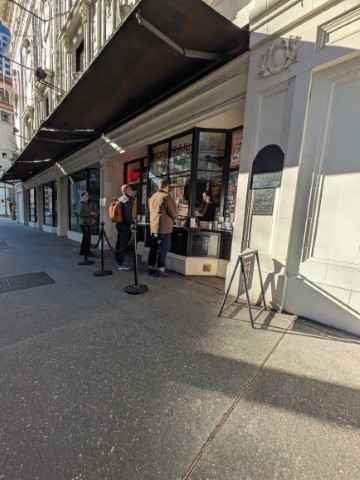
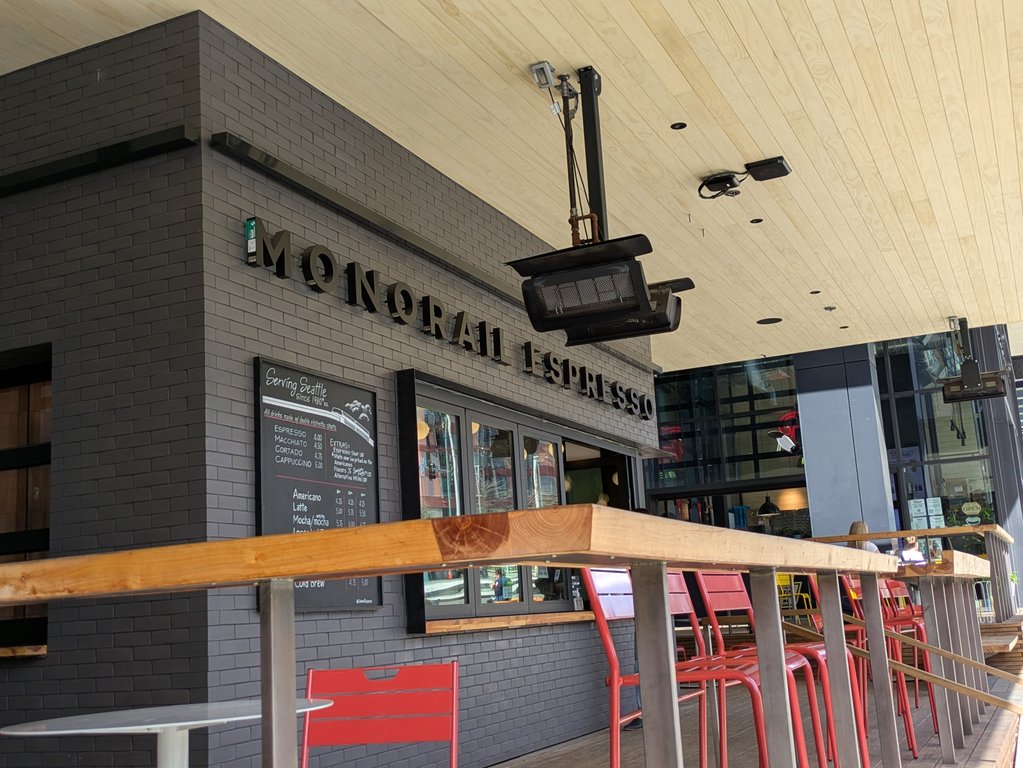
Walk this block counting lunch options since Boren. Romio's near Terry. Daawat on 9th. The Arch has restaurants inside, technically open to the public—but nothing about the building tells you that from the sidewalk. GameWorks has pizza. Regal has popcorn. Alder & Ash at the Sheraton. Now here: Monorail Espresso—first open window on the street, first place that says come in without requiring you to find a hidden entrance or navigate a lobby. One window, two blocks from the Arch, doing more for this sidewalk than the half-billion-dollar building up the street.
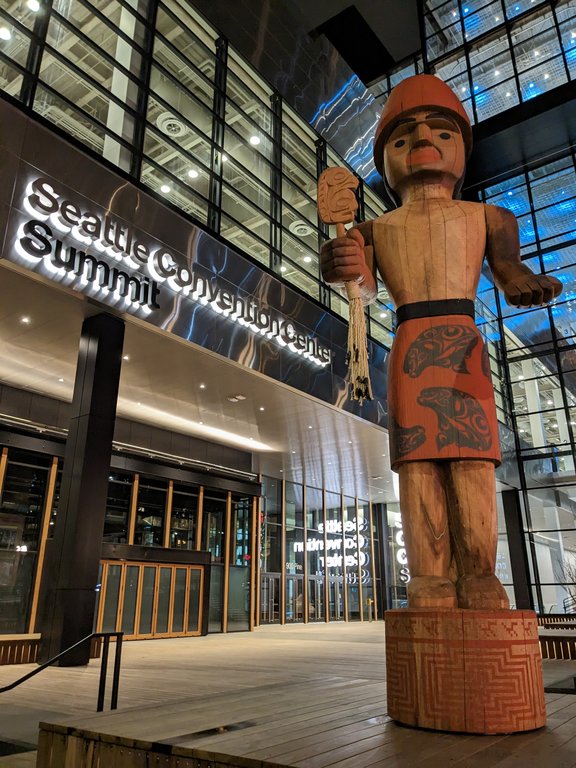
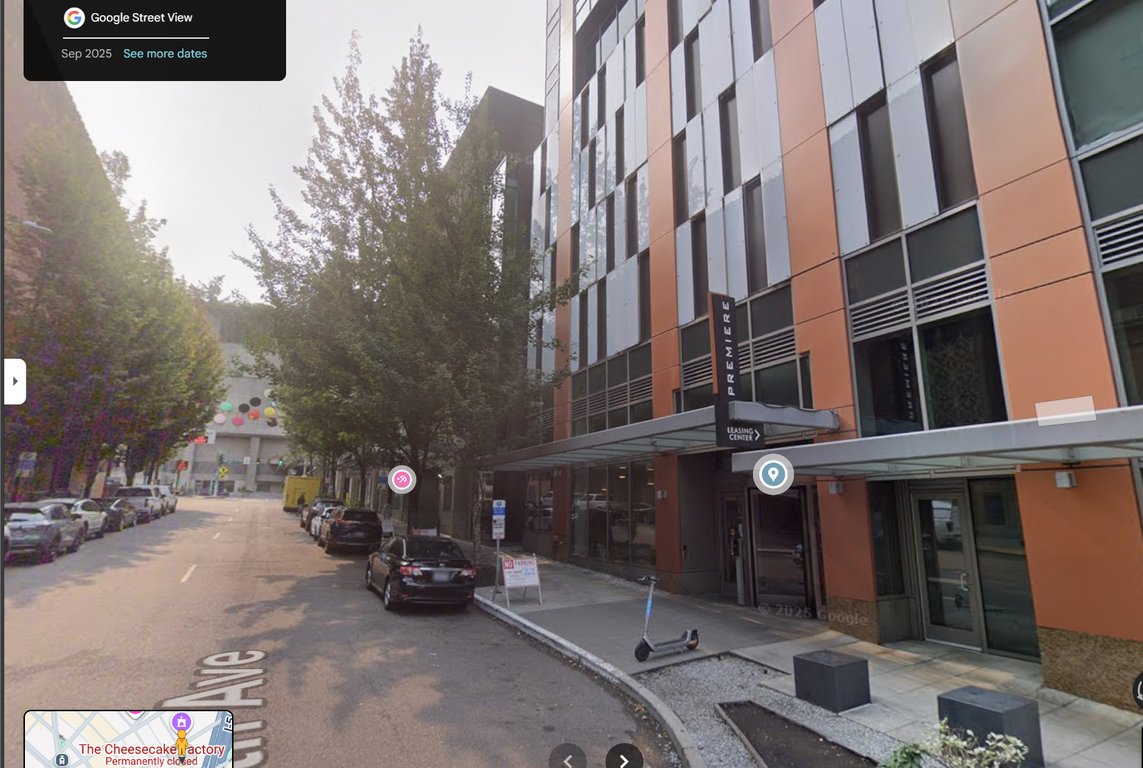
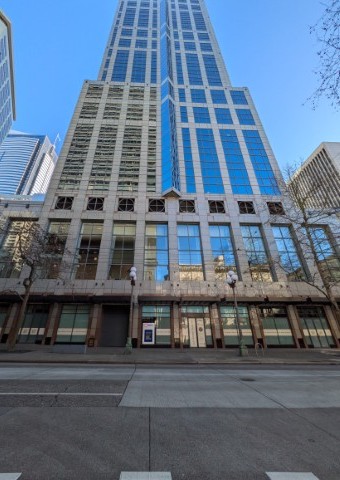
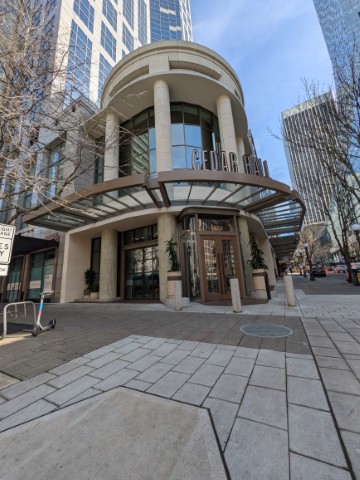
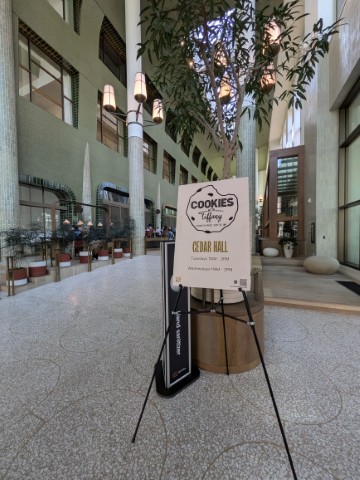
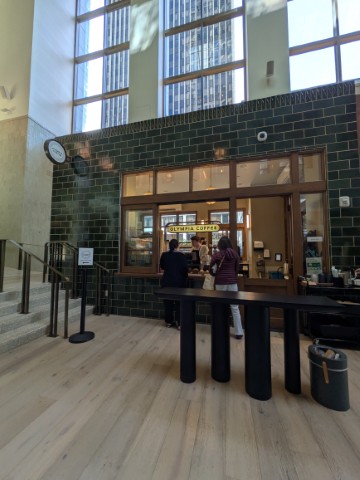
Across Pike, U.S. Bank Center. Blackstone bought it for $1.2 billion in 2019, then spent $70 million renovating the lower three floors into Cedar Hall—a public atrium with Olympia Coffee, Il Terrazzo Carmine, local art, open seating. Won Renovation of the Year. The entrance is around the corner on 5th, but the building's presence starts here: the facade, the signage, the signal that someone is investing in this corridor at street level.

The theory is simple and it's working: open the doors, create visible life, and tenants follow. But even Cedar Hall carries the weight of what's above it. U.S. Bank itself is vacating four of its seven floors—shrinking from 135,300 square feet to 16,700. The anchor tenant of the building that bears its name is leaving 88 percent of its space. A living lobby under half-empty floors is the whole downtown problem in miniature.

But someone thinks this is the bottom. JPMorgan just expanded to 128,000 square feet two blocks west, renamed the tower, brought 850 employees. Barnes & Noble opened at 6th. Q4 2025 posted the first positive net absorption quarter since 2021. And Blackstone is still here, still investing. These are companies spending their own money. What they're buying is street-level activation—coffee, food, light, open doors. In a healthy corridor, they'd see the convention center as an asset too. Right now, it's not part of the pitch.

Status Quo

The new CEO's plan—sports, entertainment, esports—may be the right call for a standalone campus in Atlanta, where Mercedes-Benz Stadium is surrounded by parking lots and highway ramps. The Arch is embedded in a commercial office corridor. One Union Square, Two Union Square, U.S. Bank Center, the Sheraton. An entertainment district and an office district have different needs at different hours, and the office tenants didn't sign leases expecting to share a loading dock with touring production companies.

Ask the leasing broker at Cedar Hall how that sounds.

A concert venue is dark most days. An esports arena has tournaments, not lunch service. You've traded one kind of empty-between-events for another, and the building still contributes nothing to the sidewalk at 12:30 on a Wednesday.

Seattle Commons

The Commons food hall would bring in a dozen choices where there used to be a closed Atrium.

One Union Square. Two Union Square. U.S. Bank Center. Roughly 2.5 million square feet of office space in three towers. Thousands of workers who need lunch, coffee, a reason to come in five days a week instead of three. The leasing broker walks the prospect through Cedar Hall—the coffee, the restaurants, the art. Then: "And two blocks east, Seattle Commons. Food hall, public event space, farmers market Thursdays." Two anchors. A corridor instead of a dead zone. A reason for the buildings between them to fill up.

The best thing the Arch could do for this neighborhood? Make it the best place in the city for office workers to have lunch.

13

5th & Pike

Pike
Stop 13 photo Stop 13 photo Stop 13 photo Stop 13 photo Stop 13 photo Stop 13 photo Stop 13 photo
Now

Is JP Morgan right? Is this really the bottom? Is downtown about to come back?

You might want to check with the artists. The ones who've been priced out of town. The ones competing for commissions with AI-generated images. The ones trying to make art while also trying to pay Seattle rent, Seattle groceries, Seattle health insurance. The affordability crisis doesn't pause for a creative practice. It eats it.

But look at this corner.

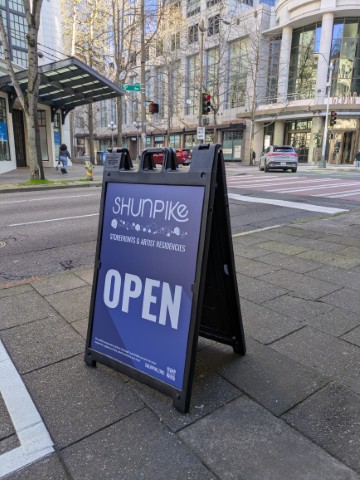
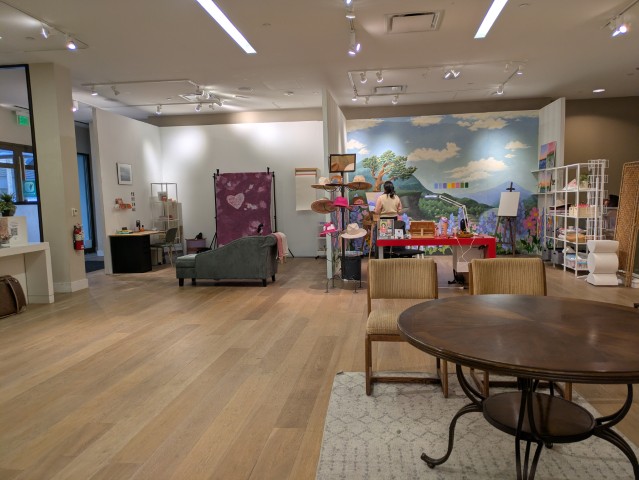
Shunpike is a Seattle nonprofit, founded in 2001, that puts artists in vacant commercial spaces. They've been doing it since 2010—first in Pioneer Square and the International District after the 2008 crash, then expanding with Amazon in South Lake Union, then across downtown with $1.63 million from the Paul G. Allen Family Foundation. They host fifty-plus artists a year. Their Storefronts & Artist Residencies program fills dead retail with working artists on six-month leases—not window displays, but people making and showing and selling art in spaces that national retailers abandoned.

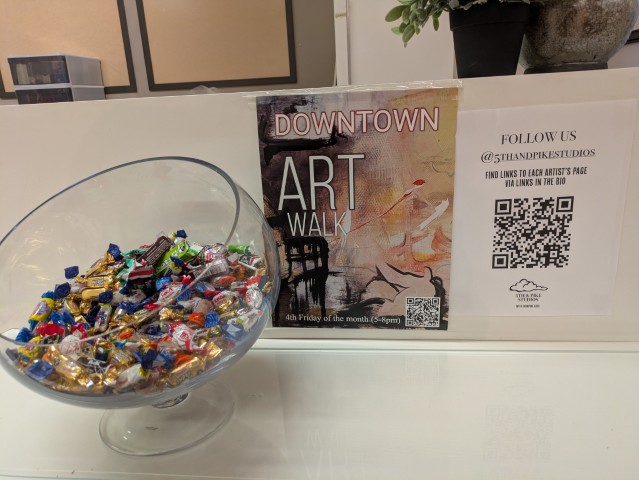
This is one of those spaces. The window says "Artists in Residence" with names listed. There's a Downtown Art Walk flyer—fourth Friday of the month, 5 to 8 PM. Inside: hardwood floors, a mural on the back wall, round tables, artist stations. This isn't a pop-up in a gutted storefront. It's a proper retail buildout that a national chain walked away from, and artists are using it because nobody else will. On the counter, a bowl of candy.

Next door: Delusional Bird Vintage. Hand-painted sign, arrow pointing in.

Two scrappy independent operations where LOFT used to be.

But the Shunpike lease runs six months. If it works—if the art draws people, if the corner starts to feel alive—a paying tenant shows up and the artists get displaced. The activation that made the space attractive is the thing that gets erased. The landlord wins, the neighborhood wins, the artists are back to invisible. That's the pattern: artists make a place worth being in, then get priced out of the place they made. Philanthropy is filling a gap the market won't close. It works—the space is warm, the art is good, someone said "come in." But it's not a business model. It's life support.

Status Quo

The SCC has a public art program, and the Summit half of it is genuinely good. Twenty-three commissioned artists, thirty-seven studio works, pieces integrated into the architecture. The advisory board intentionally brought in first-time public artists and gave them real technical and financial support. Indigenous women artists—Andrea Wilbur-Sigo, Norie Sato, Asia Tail—have work at every major entrance. Sandra Brunner curated the whole thing as a visual land acknowledgment. That's serious, thoughtful work.

The Arch is a different story. The collection dates to 1988—over a hundred works, many important Northwest artists, but it hasn't had a meaningful refresh in years. The Phyllis Lamphere Gallery on Level 2 has hosted rotating exhibitions since 1991, nearly 200 shows. Right now? Their website says: "We are currently between rotating art exhibits. Please check back later for more information."

And in both buildings, the art is display—things you walk past on your way to an event. The Summit collection is behind the ticket wall. If you're not attending a convention, it doesn't exist for you. The program is directed by the SCC board, managed by SCC staff, advised by volunteers. They know how to acquire and hang work. What they don't do—what they're not built to do—is programming. Classes, residencies, markets, performance. Down the street, a nonprofit on a six-month lease is doing more for working artists than the entire campus.

Seattle Commons

Cannonball Arts is already proving what this looks like. The former Bed Bath & Beyond at 3rd & Virginia—66,000 square feet, two floors—reopened in August 2025 as an arts center run by the Bumbershoot producers in partnership with the Muckleshoot Indian Tribe. Concerts, art markets, fashion shows, live drawing classes, Native carvers working in cedar by the windows. They didn't renovate it into something precious. They used what was there—concrete floors, soaring ceilings, escalators, freight access—and let artists fill it. Five-year lease. Programming that changes constantly. People came.

The Arch is a better building for this than a Bed Bath & Beyond. Escalators, a commercial kitchen, a loading dock, ADA access, proximity to transit, 68 meeting rooms. What it needs is programming by organizations built for it—Cannonball, Shunpike, 4Culture, Pratt Fine Arts—not a convention center staff that's done good work acquiring art but has never run a residency or a teaching studio.

Shunpike proves artists will show up. Cannonball proves audiences will. The Commons makes it permanent.

14

Pike, 5th to 4th

Pike
Stop 14 photo Stop 14 photo Stop 14 photo
Now

This is 4th Avenue, but skip what you see on an average day. Remember what it looked like on our best day.

February 11, 2026. Seahawks Victory Parade. The route ran from Lumen Field to Seattle Center along 4th Avenue—hundreds of thousands of people lined the streets.

And then the parade passes. You've seen the team, held up the phone, shouted yourself hoarse. Now what? You head to a bar. YardHouse had lines out the door—first time I've ever seen that. People streaming up Pine toward light rail. People heading into Pacific Place. Someone playing Bad Bunny behind Westlake, people dancing. The city was on.

And then some of those people turned east on Pike, heading toward Capitol Hill. It doesn't look far on the map, and there are plenty of bars and restaurants up the hill.

I heard them walking past the Arch entrance. "Are we walking the right way? Where are we going?"

Status Quo

On a day when hundreds of thousands of people needed somewhere to go, Seattle Convention Center had nothing to offer.

Inside the Arch that day: the AUTM 2026 Annual Meeting. 1,800 attendees. A nonprofit association of technology transfer professionals—universities, research centers, hospitals—wrapping up a four-day conference. Planned well in advance, booked months ago, running in the Level 4 exhibit halls. And that's it. One event.

The Seahawks won the Super Bowl two weeks before the parade. Two weeks. Seattle Center figured out how to host the rally—stage, screens, sound, crowd control. The city figured out the parade route, the road closures, the transit plan. Every bar and restaurant within a mile figured out how to staff up. The convention center figured out how to keep running a conference for 1,800 people.

Seattle Commons

Now imagine the Arch is part of Seattle Center's thinking.

Seattle Center planned the rally in two weeks. They do this—they run Bumbershoot, they run New Year's, they run the Bite of Seattle, they manage crowds and stages and vendors and porta-potties at scale. That's their job. What they don't have is a 435,000-square-foot building two monorail stops away.

The parade goes from Lumen Field to Seattle Center. The rally happens. The team shows up, the trophy gleams, the speeches echo. And then people need somewhere else to go.

The monorail runs from Seattle Center to Westlake—two blocks from the Arch. The Commons opens the building. The courtyard gets screens and a DJ. The food hall is running. The skybridge is a photo op—hold the Lombardi Trophy replica with the downtown skyline behind you. The building is lit up, doors open, come in, you're welcome here.

The crowd flows two directions from here: east on Pike toward Capitol Hill, west toward the waterfront. The corridor between them—the whole trail you've been walking—is full of people moving between anchors instead of dispersing into nothing. The bars on Capitol Hill fill up because the crowd flows east instead of scattering. YardHouse doesn't just have a line—every restaurant on the corridor has a line.

AUTM still has their conference. The Summit handles it—that's what the Summit is for. The 1,800 technology transfer professionals finish their sessions, walk out, and discover the city is celebrating around them. Maybe some of them stay an extra night. Maybe they tell their colleagues: you should see Seattle when it's on.

This isn't a fantasy. This is what Seattle Center does every week at a smaller scale. The only thing missing is the building. The Arch was right there on February 11, with people outside asking "are we walking the right way?"

The answer should have been: "Yes, you've arrived."

15

Pike, 4th to 3rd

Pike
Stop 15 photo
Now

You know about 3rd & Pike. You've read the headlines or you've walked through it yourself. For several years this was the intersection that defined downtown Seattle's problems in a single crosswalk—open drug use, mental illness, people with nowhere else to go, and everyone else hurrying past with their eyes down.

It's markedly better now. Like a wound that's just started healing—still scarred, but the acute crisis has moved or been moved somewhere else. Ross is gone. The block is quieter. The open-air market for suffering has dispersed, at least from this corner.

But nobody trusts it yet. Is this permanent? Is it a temporary lull? Are they flooding the zone with enforcement until the FIFA World Cup and then it comes back? It's going to take a few more parades—or the equivalent—to reset the perception that 3rd & Pike is a place to avoid. And until that perception resets, every business decision on this corridor prices in the risk that it comes back.

Status Quo

The convention center didn't cause 3rd & Pike. But two failures reinforced each other, and neither could stop without the other stopping first.

The dead zone. On a non-event day, the convention center contributes nothing to the blocks around it. No foot traffic, no retail, no reason for anyone to be here. That vacuum pulls the corridor down—every empty block is a block where the only people walking are people with nowhere else to go.

The displacement. The Arch is a public building—you can walk in. On a rainy day, that matters. A warm dry atrium with polished floors and a fountain is better than a doorway on 3rd Avenue. So people come in. But you can't plug in a phone—they don't want that. You can't fall asleep—security handles that. So you sit, and you exist, and eventually you leave. The building is warm enough to attract, hostile enough that you can't stay. You drift back out to Freeway Park, under the covered walkways, into the corners of the plaza.

The bathrooms are where both failures meet. The Arch has enough restrooms to support a full convention—dozens of stalls across multiple floors. But on a non-event day, you get one set of restrooms on the 1st level because we're afraid of who might use them otherwise. The restrooms stay locked, and a tiny policy decision degrades the entire corridor.

Seattle Commons

Open the bathrooms.

That's it. That's the first thing. A public building with public restrooms, open every day, maintained and staffed. It's not complicated. It's a decision.

Then fill the building. Not a monthly convention—daily presence. Enough programming that the building is staffed, lit, and occupied every day of the week. Enough foot traffic that the atrium never empties out.

16

Pike, 3rd to 2nd

Pike
Stop 16 photo Stop 16 photo Stop 16 photo Stop 16 photo Stop 16 photo Stop 16 photo
Now

Turn around. Look east. You can see the Arch from here—that glass skybridge spanning Pike Street, ten blocks up. You just walked it. Would you want to do it again?

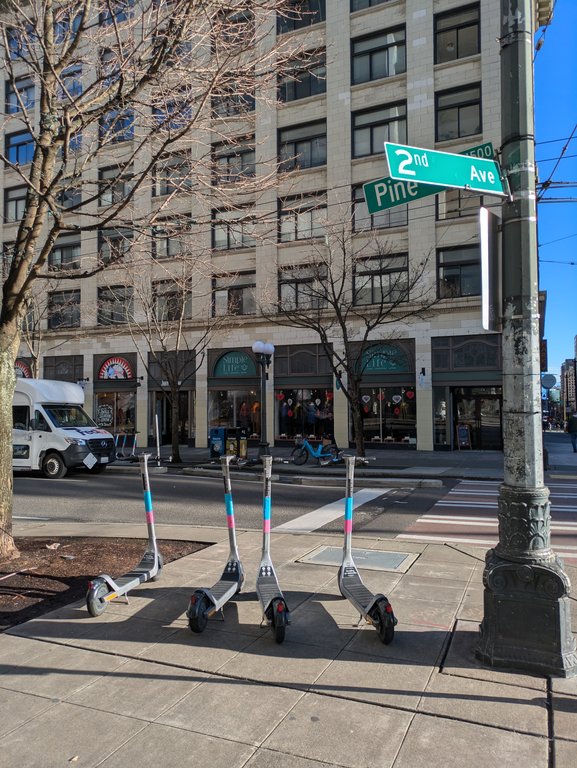
The smart move is to grab a Lime scooter, hop in the protected bike lane on the north side of Pike, and zip past all of it. The dedicated bike lane is the fastest way to skip the corridor the bike lane was supposed to activate.

The bike lane runs along the north side of Pike. That's the 800 Pike side—the street-level entrance that's been locked for years. The 705 Pike main entrance is across the street on the south side. You can scoot right past it without a reason to stop.

Status Quo

The tourist loop is closed: market, waterfront, back to the hotel—or the ship. And that's a perfectly valid way to spend a day in the city.

Convention visitors are different. They're here for the convention, but they also want to see Pike Place Market. If they're at the Arch, they'll walk down Pike. If they don't like what they see, they're not going to do it again—and they'll tell people about the experience.

That means every dollar you spend on marketing to bring people to a streetscape that isn't ready to welcome them properly is a sugar high. You'll get the visitors, they'll come, they'll do the walk, and that may be the last you ever see of them.

The SCC contributed $10 million toward these streetscape improvements. Did we get our money's worth?

Visit Seattle collects a 2.3% assessment on every downtown hotel room night to market the destination—tens of millions a year. Is that money well spent?

Seattle Commons

The vision for the Commons isn't just to build something wonderful for Seattle. It's to do what Seattle has always done—show people the future.

The 1962 World's Fair gave the city a monorail, a science center, and a campus that became Seattle Center—the same organization that should be running the Commons.

Pike Place Market, 1971. Every other city was bulldozing its public markets for parking garages and shopping malls. Seattle voted to save theirs. Now every city in America wants a public market, and they all point to Pike Place as the model.

Freeway Park, 1976. Build a park over a freeway? Absurd—until Seattle did it, and now highway lids are a national movement, including the Lid I-5 campaign visible from the Summit's own windows.

The Central Library, 2004. Rem Koolhaas turned a civic building into an architectural pilgrimage. KEXP built a global music institution out of a public broadcast studio. And the waterfront, 2025: tear down an elevated highway and bet that open space is worth more than fast traffic.

Every one of these sounded impractical until Seattle proved otherwise.

A public building, open every day, connecting Pike Place Market to Capitol Hill through a living corridor? Other cities will call it ambitious. Then they'll copy it.

17

Pike Place—1st & Pike

Pike
Stop 17 photo Stop 17 photo Stop 17 photo Stop 17 photo Stop 17 photo Stop 17 photo Stop 17 photo
Now
Status Quo
Seattle Commons

Pine Street — Pike Place Market to Boren (16 stops)
1

1st and Pine

Pine

But someone staying two nights at the Inn at the Market—or any of the hotels around here—is definitely walking the Pike-Pine corridor, whether to reach light rail or Nordstrom or a business meeting or whatever else brought them to the Puget Sound.

The overnight visitor needs the passage to work. Let's walk it and see if it does.

2

2nd and Pine

Pine

Belltown is just two blocks away, and it's home to fifteen thousand people. The nearest large grocery store is the H-Mart.

Waterfront Park was partially financed by a Local Improvement District—$174 million in special assessments on property owners in downtown, Belltown, and South Lake Union, backing bonds through 2043.

When condo owners across the LID are paying twenty-year assessments while the nearest neighborhood can't support a grocery store within its borders, the story about Seattle hardens: downtown is failing, the investment didn't land, don't buy here.

Belltown was Seattle's nightlife neighborhood—the bars, the restaurants, the late-night identity. They're hanging on. What they need isn't a new redevelopment program. They need more people coming downtown at all hours.

3

3rd and Pine

Pine

The Macy's building is a palimpsest. The Bon Marché lettering ghosted into the stone. Macy's star and lettering still hanging. Somewhere inside is a Uniqlo that nobody on this corner would know exists. The building is architecturally handsome and commercially mute.

Notice the skybridge connecting a parking garage to the old department store. That's the original sin of this corridor.

Cross to Victrola Coffee, under the green copper canopy on the corner. They have another location two blocks downhill, both pulling their weight.

Third Avenue is Seattle's outdoor bus terminal, and every major route in the system stops within a block of here. Ballard, Fremont, West Seattle, the U District, Rainier Beach—all of it connects through this corridor.

And this is what greets the visitor: two vacant corners, one ghosted department store, and a McDonald's.

4

Westlake

Pine

This is where the underground network meets the surface. On March 28, the Crosslake Connection opens—four million people on the Eastside, connected to this station in twenty-five minutes. They're expected to come here for what they can't get in Bellevue: a walkable city.

Let's see what's waiting for them.

5

Westlake Park

Pine

On the Macy's building, Uniqlo finally has a sign on the 4th Avenue side—a red square bolted onto the facade. Across 4th, Abercrombie & Fitch is carved into the stone—another ghost brand, empty windows, nice brickwork, nobody home.

Across Pine, a boarded-up former Starbucks squats in the sightline, blocking the Westlake Center signage behind it. The signs it's blocking are already dead: Saks Fifth Avenue OFF 5TH, closed, sign still hanging. You can't even see the thing that isn't there anymore because the thing in front of it also isn't there anymore.

Westlake Park is fenced up. They're working on it for this summer's festivities.

6

Westlake Center

Pine

Westlake Center has an entire food court upstairs and a monorail terminal that gets you to Seattle Center in two minutes. From the street, you'd never know either one exists.

Nordstrom Rack is leaving, moving up the street. That leaves Asean StrEAT and Zara holding the Pine Street frontage—two tenants on a block that used to be the shopping district.

7

5th and Pine

Pine

The monorail track runs right overhead, but the entrance is nondescript—a blue kiosk, a glass door, a sign that says "Level 3."

Since that corner's empty now, here's the opportunity: a bright entrance at 5th and Pine, visible from across Westlake Park, with wayfinding and straight-shot escalators to the monorail platform. Walk in off the street and you're at the Space Needle in minutes. Step off the monorail and you're in the heart of downtown.

8

Nordstrom

Pine

This is where Pine Street works.

Sephora at the corner of 5th, lit windows, signage you can read from across the street. Ben Bridge moved here from Pike—voted with their feet about which street has a future. The Rolex clock. Nordstrom flagship stretching the full block to 6th, Chanel at street level, a canopy with presence. Smaller tenants thriving in the gravity field. People carrying shopping bags. This is what a functioning retail corridor looks like.

There's a light rail entrance here too, embedded in the Nordstrom block. Unlike surfacing at 3rd into vacant corners and a McDonald's, this one feels like it belongs. You come up the escalator into something that's working.

But not everyone arrives by light rail. On the 6th Avenue side, Nordstrom offers valet parking—drive in, shop, drive out. Maybe that's why one block in any direction, it's still kinda dead.

9

Pacific Place

Pine

Another skybridge—this one crosses 6th between Pine and Olive, connecting Nordstrom to Pacific Place.

Pacific Place opened in 1998 as the linchpin of a three-block Pine Street revival. It sold in 2014 for $271 million. Last year it sold again for $67 million—45 percent occupied. Third owner in a decade, each one sure they can turn it around.

The mall has real tenants. Din Tai Fung and Haidilao are serious international food draws. AMC theater on the top floor. But the Pine Street frontage gives nothing back—empty storefronts behind trees, green metalwork, bike racks with no bikes.

Across Pine at 7th, Hotel Theodore and Rider restaurant—one of the few hotels actually on the corridor. But once you pass Nordstrom's gravity, Pine drops off a cliff again.

10

The Approach

Pine

Between Pacific Place and the summit, hotels and their restaurants serve the convention trade—Grand Hyatt, Paramount Hotel, Ruth's Chris. Dough Zone and Carlile Room on the final approach. You can see the marquee and blinking signage of the Paramount Theatre.

Otherwise, it's blank walls, empty storefronts, and a parking lot.

When there's a convention in town or a show at the Paramount, it's crowded. Otherwise, it's pretty quiet.

11

The Summit

Pine

You're here. 900 Pine. The Seattle Convention Center Summit.

If you wanted the Arch, you should have turned two blocks ago.

12

Summit to Arch

Pine

Three ways to walk from the Summit on Pine to the Arch on Pike: 7th, 8th, or 9th Avenue. One block south.

7th takes you past a dead Cheesecake Factory and deposits you at the wrong end of the Arch. 8th is a vehicle tunnel—the building bridges over the street, traffic queues underneath, and the pedestrian walks past the Hertz garage and blank walls. 9th has a visual through-line—the Paramount marquee at one end, colored dots on the Arch's wall at the other—but the dots are decorating a garage, and the east sidewalk dead-ends at an I-5 express lane exit.

The convention center is one institution with two buildings. The block between them is car infrastructure.

13

The Door

Pine

The most direct path from Summit to Arch is the vehicle tunnel on 8th Avenue—one block, straight shot.

Halfway down on the east side, there's a glass door at 1512 8th. Planters, the Arch's facade. The door is locked. A convention center entrance that only opens as an emergency exit.

What might happen if they just left that door open to the public?

14

Summit Street-Level Retail

Pine

The Summit's architects got this right.

A brewery with "COLD BEER" in the window, garage-door glass panels rolled up to the sidewalk, outdoor tables, round wooden stools on the pavement. A Progress Pride flag. The Summit's dramatic angular facade above, but at eye level it's a place that opens to the street. People sitting outside. This is what street-level activation looks like when a building is designed to give something back to the pedestrian.

Monorail Espresso again—open counter, red chairs, outdoor deck. The same small operator from Pike Street, present on both corridors.

Piroshky Piroshky—another Pike Place Market brand that migrated east. The market's gravity extending up Pine, same direction we've been walking.

Across the street, past the concrete planters lining the sidewalk, the trench opens to the I-5 freeway below.

15

Boren & Pike

Pine

Look uphill on East Pine toward Capitol Hill. The pink building is Voodoo Doughnuts. Beyond it, the restaurants pick up, and on Melrose a couple blocks up, the neighborhood comes alive.

I worked at the Summit for a year—admission attendant, February to December 2023. Then I quit to learn how to program again. My first big project was Convention City Seattle, a collection of online trail maps to the neighborhood. The idea is that visitors to the Summit should have a quick and easy reference to area businesses, including the Melrose Loop on Capitol Hill, the Pike-Pine corridor to the Waterfront, the Monorail to Seattle Center and Queen Anne, and the walk to South Lake Union.

You can get anywhere from the Summit.

16

Boren Avenue

Pine

One block south from Pine to Pike. Boren Avenue bridges over I-5 here—look down and you're staring into the trench. Six lanes of traffic, concrete walls, the roar.

This is the gap. Downtown on one side, First Hill and Capitol Hill on the other. The convention center straddles it—the Arch built on air rights over the freeway, the Summit on the east side of Boren. Two buildings separated by a highway.

The Lid I-5 initiative proposes capping the freeway through this stretch. New civic space where the trench is now, connecting downtown to the neighborhoods east of the highway. It would transform this walk from a bridge over a freeway into a walk through a park.

A highway lid costs billions. It requires state and federal partnership and a decade of political will under the most optimistic timeline. But every lid project in the country faces the same question: what's on both sides that's worth connecting?

Right now the answer here is a convention center that's dark most days and a residential neighborhood that avoids coming downhill. That's not a case for billions in infrastructure.

But what if the Arch were open every day of the year?

Let's go to Plymouth Pillars Park and take the tour.

Sources

Photos
Scroll to a stop to see photos

Sources & Notes

  1. 1 Paula Becker, "Seattle voters reject the Seattle Commons levy on September 19, 1995," HistoryLink Essay #8252. See also Walt Crowley, "South Lake Union: The Evolution of a Dream," HistoryLink Essay #4250. The 61-acre figure and Hinterberger/Bassetti origins are documented in both.
  2. 2 Allen loaned $20 million initially, later committing up to $30 million. "The History of South Lake Union," The Seattle Times, April 27, 2003. The Paul Allen Estate confirms "$20 million (later committing up to $30 million)."
  3. 3 First vote September 19, 1995 ($111 million levy); second vote May 21, 1996 ($50 million reduced levy). Both failed. HistoryLink Essay #8252; "The History of South Lake Union," The Seattle Times, April 27, 2003. See also Seattle Parks Foundation, "Beyond the Levy: A Closer Look at the Seattle Commons."
  4. 4 CHS Capitol Hill Seattle, "This company just bet $60M against the future of business travel," September 2, 2022. Acquisition price $60 million per CHS and King County records. The Seattle DJC reported $80 million in a later article; the discrepancy may reflect total project cost vs. acquisition price.
  5. 5 CHS Capitol Hill Seattle, "Once a hotel at the base of Capitol Hill above downtown, Avia Apartments on Pike is now open," December 4, 2025. PEG Companies originally planned phased delivery beginning May 2024 with completion in October 2024.
  6. 6 7% Seattle / 2.8% rest of King County. "Seattle's massive $2B convention center finally opens after delays," The Seattle Times, January 24, 2023.
  7. 7 $1.9 billion total project cost. "No bailout needed for Washington State Convention Center expansion, as private financing presumes economic rebound," The Seattle Times, April 3, 2021. Also David Kroman, "Seattle Convention Center's attendance is up, so why is it 'fragile'?," The Seattle Times, February 1, 2026.
  8. 8 The $75 million annual interest figure is an estimate based on the total debt load. Exact annual debt service figures are available in the SCC's audited financial statements.
  9. 9 Reserves dropped from over $200 million to approximately $25 million. CEO Jennifer LeMaster quoted in Kroman, "Seattle Convention Center's attendance is up, so why is it 'fragile'?," The Seattle Times, February 1, 2026: "From their high of more than $200 million, the reserves today sit at about $25 million."
  10. 10 Operating costs 2.5 times pre-pandemic levels. Kroman, The Seattle Times, February 1, 2026: "with so much more space to operate, combined with broader inflationary pressures, operating costs are 2.5 times what they were in 2019."
  11. 11 CEO Jennifer LeMaster: "I'm not going around saying the sky is falling, but I want people to be aware that we're in a fragile position." The "scary" characterization describes the thin reserve backstop. Kroman, The Seattle Times, February 1, 2026.
  12. 12 Pike-Pine Improvements: 23 blocks, 1,400 plants, 1.5 million monthly users. Mayor's Office, "Mayor Harrell and the Office of the Waterfront and Civic Projects, Sound Transit join civic and community leaders to celebrate the completion of pedestrian and bicycle improvements on Pike and Pine," June 11, 2025.
  13. 13 CHS Capitol Hill Seattle coverage of gun violence incidents near Freeway Park / Hubbell Place area, 2025. See CHS gun violence tag.
  14. 14 Initially reported as suspected assault. Medical examiner ruled the death accidental—acute drug intoxication (methamphetamine). CHS Capitol Hill Seattle, "Medical examiner: Death of man found near Freeway Park was drug-fueled accident," November 20, 2025. Initial report: CHS, "Seattle Police investigating as man found seriously injured dies near Freeway Park," November 15, 2025.
  15. 15 SPD Blotter, "Two Men Stabbed During Robbery in Freeway Park," January 7, 2026. See also CHS Capitol Hill Seattle, "Police: Two victims in Freeway Park robbery stabbings," January 7, 2026.
  16. 16 The fountains have been intermittently shut down due to maintenance costs and safety standards. The 28,000 gallons-per-minute canyon fountain has been reduced to approximately 9,500 gpm when running, and is often not active. The Cultural Landscape Foundation, "Freeway Park: Past, Present, and Future?." The "since 1992" date is approximate and based on multiple accounts describing decades of disuse; fountains have been periodically reactivated for events.
  17. 17 Freeway Park opened July 4, 1976. Designed by Lawrence Halprin's office under Angela Danadjieva. Listed on the National Register of Historic Places in 2019; designated a Seattle Landmark in 2022. Freeway Park Association, "About the Park." See also Wikipedia and DOCOMOMO.
  18. 18 Seattle City Council, "Council passes budget closing $250-plus million deficit, making record investment in affordable housing, protecting services," November 21, 2024. The $140 million 2027 projection from PubliCola, "Bad News for the City Budget: New Forecast Slashes $241 Million from Last Year's Projection," April 10, 2025.
  19. 19 King County's $175 million deficit and new sales tax authorization. Multiple local news sources, 2024-2025.
  20. 20 Washington state $4 billion shortfall over four years. Axios Seattle, "Why Washington state is in a big budget hole again," January 12, 2026.
  21. 21 SPD staffing at 924 deployable officers as of spring 2025. Mayor's Office, "Mayor Harrell celebrates significant increase in police hiring in 2025," April 28, 2025. Target of ~1,300 from the same release. Age demographics from MyNorthwest, "Rantz: Year-end Seattle police staffing is dire."
  22. 22 Washington state lowest per-capita law enforcement for 13 consecutive years. MyNorthwest, citing the FBI's Uniform Crime Report and Bureau of Justice Statistics. See also the Washington State Criminal Justice Training Commission's annual reports.
  23. 23 Horizon House, founded 1961, approximately 480 residents in independent and assisted living.
  24. 24 CHS Capitol Hill Seattle, "Construction set to begin on new 33-story senior housing tower on First Hill; Horizon House says 70% of its units are already claimed," December 2025.
  25. 25 The SCC operates as the Washington State Convention Center Public Facilities District. "Finances," Seattle Convention Center. See also Wikipedia.
  26. 26 Initial bond sales exceeded $1 billion; additional $342 million sold in April 2021 at 2.8% interest yield. The Seattle Times, "No bailout needed for Washington State Convention Center expansion," April 3, 2021. See also Washington State Treasurer, "State Treasurer approves Convention Center financing agreement," 2021. The $300 million over budget figure from Kroman, The Seattle Times, February 1, 2026.
  27. 27 During COVID, the SCC sought $300 million from city, county, and state. King County offered $100 million; the city indicated a possible path; the state was asked for legislative help. Field of Schemes, "Seattle's convention center is seeking a $300M federal bailout," May 19, 2020. See also King5, "King County offers $100 million loan."
  28. 28 Vanishing Seattle, founded by Cynthia Brothers. Follower count approximate as of early 2026 across social media platforms. See GeekWire, "Cynthia Brothers," 2018; Preservation Washington, "Vanishing Seattle"; PBS, "Losing Third Places in Seattle."
  29. 29 Seattle Public Library's $5 million capital-to-operations transfer for 2026. SPL, "2026 Operations Plan." See also CHS Capitol Hill Seattle coverage of branch hour reductions and restorations, 2024-2026; West Seattle Blog, "Seattle Public Library cuts back schedule," April 2024.